Cordless Pool Cleaner for Algae: Is Scuba X1 a Fit?
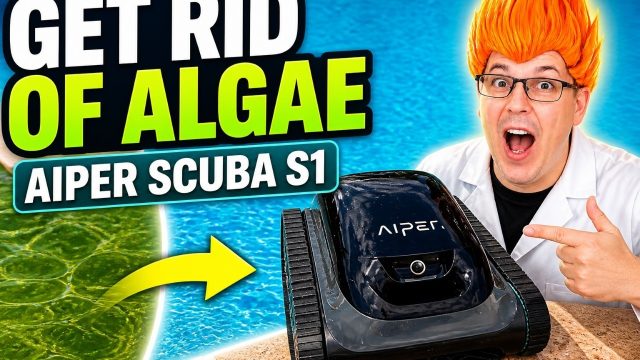
The AIPER Scuba X1 aims at inground-pool owners who want cordless cleaning, fine-debris filtration, waterline scrubbing, and dock charging. Its algae-cleaning claims are promising, but they remain manufacturer claims here.
Affiliate disclosure: As an Amazon Associate I earn from qualifying purchases. This article may contain affiliate links, which means I may earn a commission at no extra cost to you.
The AIPER Scuba X1 looks like a sensible cordless robot for an inground pool owner tired of dealing with cables, basic floor-only cleaning, and messy storage. The big draw is not one flashy suction number. It is the combination: a charging dock, multiple cleaning modes, waterline-focused cleaning, and a fine-filtering claim aimed at the small stuff that makes pool water look dull.
For a cordless pool cleaner for algae, though, keep the marketing in its lane. AIPER says the Scuba X1 can pick up algae, fine sand, and pebbles with its dual-jet system. That is a useful target, but I would not buy any robot assuming it replaces proper water chemistry or manual brushing during a real algae problem. Robots remove debris. They do not magically cure the cause.
The AIPER Scuba X1 is a feature-heavy cordless option for inground pool owners who prioritize waterline cleaning, fine filtration, and dock-based charging. Its algae and coverage claims sound strong, but buyers should treat those as manufacturer claims and confirm fit for their pool before buying.
As an Amazon Associate I earn from qualifying purchases.
| Pool type | Inground pools |
|---|---|
| Cleaner type | Cordless robotic pool cleaner |
| Claimed suction | 6,600 GPH dual-jet system |
| Filtration claim | Multi-layer filtration down to 3 microns |
| Waterline feature | WaveLine 2.0 horizontal scrubbing |
| Included charging | Wireless charging dock |
Who the AIPER Scuba X1 is for
This one is aimed squarely at inground-pool owners who want a more hands-off cleaning routine. If the pool collects fine grit, windblown debris, or material that settles after a storm, the stated multi-layer filtration system is more relevant than another vague “powerful cleaner” promise.
It also makes sense for owners who care about the waterline. That narrow band around the pool gets sunscreen, body oils, dust, and general grime. It is one of the places a pool can look dirty even when the floor is clean. AIPER says its WaveLine 2.0 system keeps horizontal contact with the waterline to scrub buildup. That is a worthwhile feature to prioritize if waterline cleanup is on your regular chore list.
The dock is another practical point. Cordless cleaners are convenient only when charging and storing them does not become a separate annoying project. AIPER lists a wireless charging dock in the box for both charging and storage. That is cleaner than leaving a robot, cable, and power supply spread around the equipment pad like a yard-sale display.
On the other hand, this is not automatically the right answer for every pool owner. If your main problem is big leaves, sticks, or heavy seasonal debris, basket size and day-to-day debris handling matter just as much as a fine-filtration claim. And if you are dealing with established algae, balance and sanitize the water first. A robotic cleaner can help remove what is in the pool, but it is not an algae-treatment shortcut.
What the cordless pool cleaner for algae claims to do
AIPER lists 6,600 GPH of suction from a dual-jet setup and says the Scuba X1 is designed to collect fine sand, pebbles, and algae. Those are ambitious, useful claims because they cover three very different cleanup headaches:
- Fine sand settles in low spots and can make a pool look dusty right after vacuuming.
- Pebbles are heavier and test whether a cleaner can pick up more than light surface debris.
- Algae debris can be tiny and persistent after brushing and chemical treatment.
The filtration claim is equally important. AIPER says the multi-layer system, including a MicroMesh ultra-fine filter, can capture particles down to 3 microns. In plain English: the product is positioned for finer cleanup, not just leaves and bugs. That could be useful for routine maintenance when a pool has a hazy, dusty look from small debris.
But here is the practical distinction: filtering out suspended or settled debris is not the same thing as solving an algae bloom. Green, yellow, or black algae needs the right sanitation level, circulation, brushing, and follow-up cleaning. A robot is cleanup equipment, not water chemistry.
Waterline scrubbing is the standout feature on paper
Most pool-cleaner shopping starts with suction. Fair enough. But waterline cleaning is often where a robot earns its keep—or leaves you grabbing a brush anyway.
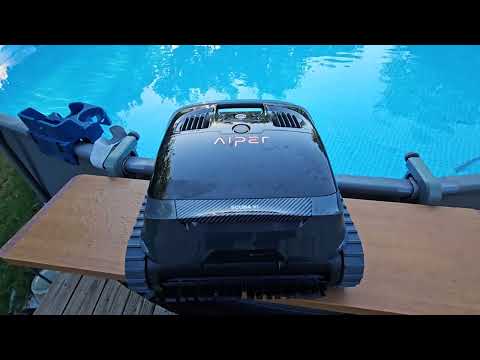
AIPER says the Scuba X1 uses WaveLine 2.0 for continuous horizontal waterline scrubbing. If it works as intended in your pool, that means the robot is intended to work across the band where grease and buildup collect instead of simply climbing, touching the wall for a second, and moving on.
That matters most for pools with frequent use, lots of sunscreen, nearby trees, or dust. It is also a good reason to compare this model against cheaper cordless robots that focus only on the floor. A clean floor is nice. A dirty waterline still makes the whole pool look neglected.
I would still check the pool surface, wall shape, steps, ledges, and any unusual transitions before assuming a waterline-capable robot will reach every trouble spot. “Waterline cleaning” is not a promise that every inch around every pool geometry gets identical contact.
Navigation and retrieval: useful features, with one catch
The Scuba X1 is listed with WavePath 3.0 dToF sensors. AIPER says those sensors detect obstacles, avoid collisions, and adjust the cleaning path for better coverage. Smarter routing is a good thing in theory because random wandering wastes battery time and can leave patches behind.
There is also a Smart Waterline Parking feature, but read the fine print: AIPER ties that feature to the optional HydroComm Pro. The idea is simple—when cleaning is finished, the robot parks at the waterline so you can grab it without hauling it up from the deep end. Nice feature. Not included by default, based on the supplied product description.
That optional accessory point is worth remembering when comparing costs. A feature that depends on extra hardware is not quite the same as a built-in convenience.
+ Pros
- Cordless robotic design avoids a floating power cable.
- Wireless charging dock is listed as included for charging and storage.
- AIPER claims ultra-fine, multi-layer filtration down to 3 microns.
- Waterline scrubbing is designed for grease and buildup at the tile line.
- Multiple cleaning modes, including scheduled cleaning, are listed.
! What to know
- Algae removal is a manufacturer claim; a robotic cleaner does not replace proper water chemistry and brushing.
- Smart Waterline Parking requires the optional HydroComm Pro accessory.
- Pool shape, surface, slopes, steps, and debris load can affect real-world cleaning coverage.
- The 70,000-gallon-per-charge figure is a manufacturer claim and should be treated as a sizing reference.
Cleaning modes and dock charging make the routine easier
AIPER lists the Scuba X1 as having 4+1 cleaning modes, including Scheduled Cleaning. The exact best mode will depend on whether you are dealing with everyday dust, a dirty floor after a storm, or waterline buildup. Still, multiple modes are more useful than a single “drop it in and hope” setting.
The company also claims coverage of pools up to 70,000 gallons per charge. That is a capacity claim, not a guarantee for every pool. Pool shape, surface, slope, debris load, and the selected cleaning mode can all change how much work a robot has to do. Treat the number as a sizing reference, then make sure your own pool is within the product’s intended use.
The included wireless charging dock is the convenience feature I would put near the top of the list. Cordless is great, but a cordless robot without a tidy charging spot can become one more bulky item to move around. A dedicated dock gives it a home between cleaning cycles.
Specs
| Spec | Detail |
|---|---|
| Product | AIPER Scuba X1 Cordless Robotic Pool Cleaner |
| Pool compatibility | Inground pools, per product description |
| Suction claim | 6,600 GPH with dual jets |
| Filtration claim | Multi-layer system with MicroMesh ultra-fine filter; captures particles as small as 3 microns |
| Navigation claim | WavePath 3.0 dToF obstacle-detection sensors |
| Cleaning modes | 4+1 modes, including Scheduled Cleaning |
| Claimed capacity | Up to 70,000 gallons per charge |
| Charging and storage | Wireless charging dock listed as in-box |
| Optional accessory | HydroComm Pro for Smart Waterline Parking |
Scorecard
Cordless format and included dock target easy storage and charging.
Waterline scrubbing, multiple modes, and sensor-based navigation are strong listed features.
AIPER claims 3-micron filtration and pickup for fine sand and algae debris.
The optional accessory for waterline parking is an added buying consideration.
Algae capability is listed by AIPER, but proper chemistry remains essential.
Before you buy the Scuba X1
Start with the job you need done. If you want an inground-pool robot that is positioned for fine debris, regular waterline attention, and cordless storage, the Scuba X1 checks the right feature boxes. If you mainly need emergency algae cleanup, put the chemistry plan first and the robot second.
Also account for the optional HydroComm Pro if waterline parking is important to you. Do not assume every advertised convenience is in the base box. The charging dock is listed as included; the HydroComm Pro is described as optional.
Finally, compare the product’s claimed pool capacity and cleaning modes against your pool’s actual layout. Deep ends, sharp slopes, tanning ledges, steps, unusual wall transitions, and heavy leaf loads can change what “automatic” looks like in real life.
FAQ
Can the AIPER Scuba X1 remove algae?
AIPER says the Scuba X1 can clean algae along with fine sand and pebbles. A robot may help collect loosened algae debris, but it does not replace brushing, circulation, testing, and proper sanitizer levels needed to resolve an algae issue.
Is the AIPER Scuba X1 for inground pools?
Yes. The supplied product description positions the Scuba X1 as a cordless robotic cleaner for inground pools.
Does the Scuba X1 clean the waterline?
AIPER says its WaveLine 2.0 system provides horizontal waterline scrubbing intended to remove grease and buildup. Results can vary with pool surface and geometry.
Does it come with a charging dock?
According to the supplied listing information, a wireless charging dock is included for charging and storage.
Is Smart Waterline Parking included?
The parking feature is described as working with the optional HydroComm Pro. Confirm the current package contents before purchasing if easy retrieval is a priority.
Final take
The AIPER Scuba X1 is worth a look if your shopping list starts with cordless operation, a dock for storage, fine-debris filtration, and waterline-focused cleaning. Those are practical features, not fluff.
Just keep expectations realistic around algae. Use a robotic cleaner to help remove debris after you address the water itself. If AIPER’s stated suction, filtration, and navigation capabilities fit your pool’s needs, the Scuba X1 is positioned as a well-equipped option rather than a bare-bones floor bot.
As an Amazon Associate I earn from qualifying purchases.