Cordless Robotic Pool Cleaner for Waterline Cleaning?
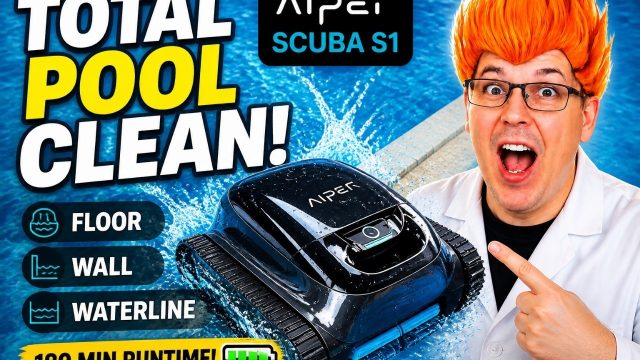
The AIPER Scuba X1 took on floor debris, walls, and the waterline without the hose tangles that make traditional pool vacuums annoying.
Affiliate disclosure: As an Amazon Associate I earn from qualifying purchases. This article may contain affiliate links, which means I may earn a commission at no extra cost to you.
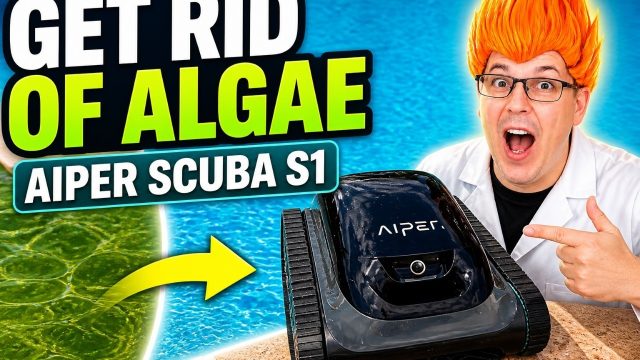
The AIPER Scuba X1 is the kind of cordless robotic pool cleaner that solves a very specific headache: dragging out a long vacuum hose, untangling it, and hoping it does not pop loose halfway through the job. I put the X1 in my inground pool and watched it handle floor passes, climb walls, work along the waterline, and pull out a surprising amount of tree debris and fine junk.
A strong cordless option for larger inground pools if you want floor, wall, and waterline cleaning without managing a hose. It is heavy, will not clean steps, and still needs a pole hook for retrieval.
As an Amazon Associate I earn from qualifying purchases.
| Pool type | Inground pools |
|---|---|
| Cleaning coverage | Floor, walls, and waterline modes |
| Power setup | Cordless; wireless charging cradle |
| Filtration | Main basket plus removable fine-debris filter |
| Retrieval | Pole hook retrieval from sidewall |
| Best for | Larger pools and owners avoiding hose vacuums |
My short take: if you have a larger inground pool and want a robot that can cover more than just the floor, this is a serious option. The tank-style tracks handled my changing depths and rounded pool edge well. The waterline mode actually traveled sideways along the wall. That matters, because the waterline is where slime, grime, and that ugly ring like to hang out.
This is not a claim that one robot eliminates every pool chore. I still see steps as a separate manual-cleaning job, and the X1 is substantial enough that lifting it into the pool deserves some care. But for the routine work of collecting debris and reducing the need to set up a hose vacuum, the cordless format changes the experience in a useful way.
Why this cordless robotic pool cleaner is easier than a hose vacuum
I have used a Hayward-style cleaner with a long hose. It works, but that hose is roughly 20 feet of something waiting to tangle, snag, or disconnect when you are trying to do literally anything else. The Scuba X1 has no hose connected to it. You select a mode, put it in the water, and let it sink before it starts its cycle.
That cordless setup is the big win here. It also means you are not routing a hose around furniture, worrying about it floating into the wrong place, or untwisting it before every cleaning session. For regular pool maintenance, less setup is not a luxury. It is the difference between using the cleaner and putting it off until the pool looks rough.
The difference is especially noticeable when the job is not a major cleanup. A hose vacuum can be perfectly workable when you have set aside time to vacuum the whole pool. On an ordinary day, though, it is easy to look at a little sand, a few leaves, or dog hair and decide the setup is more trouble than it is worth. With this robot, I could choose the mode and put it in the pool without managing that extra length of hose.
The tradeoff is weight. The X1 is heavy when you place it into the pool. It is manageable, but this is not a little lightweight pool toy. Pick it up like a substantial piece of equipment, because that is what it is. That same point applies after a run: let it drain at the side before dealing with the basket rather than trying to rush the process.
What I saw the AIPER Scuba X1 do in my pool
The X1 uses caterpillar-style tracks, with brushes at the front and rear. In my pool, those tracks let it travel through changing depths, get over the floor drain, and climb the walls. My pool also has a rounded edge that creates a slope rather than a simple hard transition. The robot climbed that change and adjusted its route on its own.
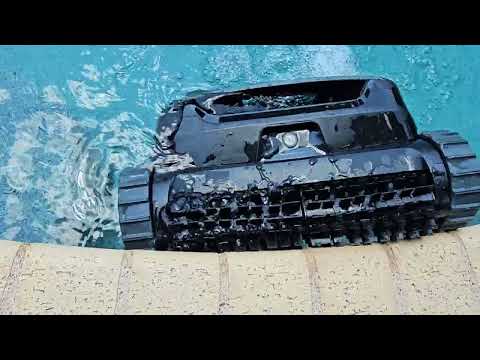
I tried WaveLine mode first. The goal of this mode is horizontal cleaning at the waterline. My pool had received seven inches of rain and was extremely full, so the cleaner did not have the normal bit of wall above the water that it is designed to work against. Still, I watched it travel horizontally near the top, descend after about 60 seconds, then return upward and continue its waterline work.
That unusually high water level is important context if waterline cleaning is your reason for shopping. I could see the X1 attempting to work at the top of the pool, but there was barely any wall above the surface for it to contact. Under normal water conditions, there should be more of that waterline area available. In my pool, the useful observation is that it maintained the horizontal pattern as best it could rather than simply abandoning the area.
It also reached a spout/feature area, recognized that it had run into an obstruction, dropped down, and continued around it. That is the behavior I want from a robot: do not sit there fighting the same obstacle all afternoon. It did not need me to stop the cycle and reposition it when it encountered that feature.
Then I switched to Auto mode. I watched the X1 climb the wall, work near the waterline briefly, turn itself, and change its route as it worked out the shape of the pool. In roughly two minutes of time-lapsed floor cleaning, it completed a full there-and-back path across the pool. It was not just wandering around like a Roomba that got confused by a throw rug.
That floor pattern is relevant because a cordless robot should be doing more than making a few random passes before needing attention. I did not measure total coverage across every possible pool shape, and I cannot say how it will navigate every layout. In this pool, though, I saw an organized there-and-back pass, wall work, and route changes around the conditions that are actually present here: depth changes, a drain, a rounded edge, steps, and a feature area.
Waterline cleaning is the standout feature
Most pool owners understand floor cleaning. You can see leaves, sand, and dirt down there. Waterline cleaning is different. It is easy to ignore until you have a greasy, slimy, discolored line around the pool that needs elbow grease and a brush.
In WaveLine mode, I watched the Scuba X1 work sideways around the waterline area rather than simply climbing a wall and coming right back down. It periodically descended and then returned to the top. In my unusually full pool, it could not protrude above the water by its intended amount, but it still kept working horizontally as best it could.
For me, that distinction is why the WaveLine setting is more meaningful than a generic wall-climbing claim. A robot that only reaches the wall briefly is useful, but it does not necessarily spend enough time at the waterline to address the visible buildup there. The X1’s lateral movement at the top was the specific behavior I wanted to see. If the waterline is a recurring maintenance annoyance in your pool, this mode is a reason to consider the X1 rather than a floor-only robot.
That does not mean it cleans steps. It does not. When it encountered my steps, it descended. If steps are your main cleaning pain point, plan on brushing or vacuuming those separately. No reason to pretend otherwise. It is better to think of the X1 as coverage for the open floor, walls, and waterline than as a replacement for a brush in every tight or raised area.
The basket and algae filter make sense for real pool debris
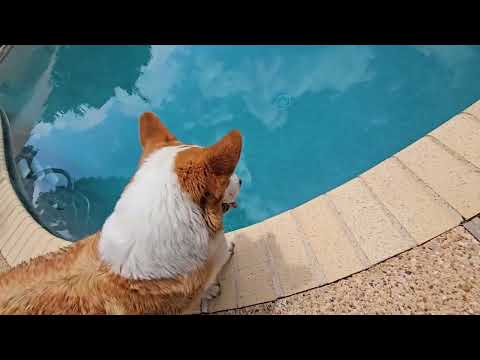
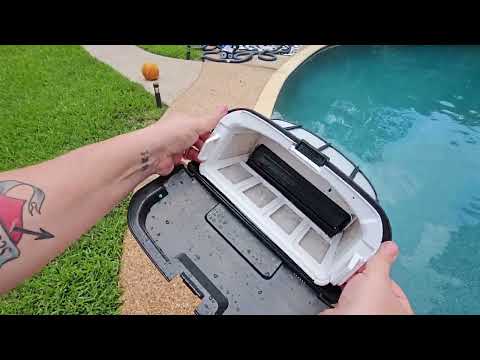
The Scuba X1 has a removable main debris basket plus a removable fine-debris/algae filter insert inside it. After the run, I opened the basket and found tree debris, smaller debris caught in the filter, dog hair, and what looked like a dog toy. Apparently the robot was also cleaning up after Odie.
The fine filter had changed from white to discolored after use. I removed it, cleaned it, and reinstalled it in the basket. That filter is useful for the sand, dirt, algae-related debris, and fine material that a basic coarse basket can miss. Seeing the color change gave me a straightforward visual reminder that fine material was being collected, not just the larger pieces that are easy to notice in a basket.
There is a practical buyer decision here. The fine insert is valuable for normal day-to-day debris, but a pool covered in leaves is a different situation from a pool with mostly sand, dirt, and hair. The removable design lets you adapt the basket setup instead of treating every cleanup as the same job.
Here is the practical approach I would use after a major storm: if the pool is loaded with leaves, remove the algae filter first and run the cleaner with the main basket. Empty the big stuff, charge the robot, then run it again with the fine filter installed. Trying to run a mountain of leaves through the fine insert just makes that insert more annoying to clean. For lighter debris, I used both pieces together and found debris in both the main basket and the filter.
+ Pros
- Cordless design avoids hose tangles and disconnections
- Climbed walls and navigated changing pool depths and rounded edges
- WaveLine mode traveled horizontally near the waterline
- Main basket and removable fine-debris filter handled both large and small debris
- Retains the last selected mode after power cycling
- Finished parked against the sidewall for pole-assisted retrieval
− Cons
- Heavy to lift and place into the pool
- Does not clean pool steps
- Still requires a long pole and hook for retrieval in the demonstrated setup
Modes, charging, and retrieval
The on-unit controls offer Auto, Floor, Wall, and WaveLine modes. Auto is the general-purpose choice when you want it to handle both floor and wall work. If the floor is the problem, select Floor. If the waterline is the problem, select WaveLine. Simple.
Choosing a focused mode is useful because the mess does not always occur evenly across a pool. After a windy day, you may care most about the floor. If the water is clear but a ring has developed at the top, the waterline-focused setting is the relevant one. I would select based on the pool’s actual condition rather than treating Auto as the answer for every run.
One small feature I liked: the X1 retained the last mode I selected after I powered it off and turned it back on. That sounds minor until you have used equipment that makes you cycle through every setting again, every time. Small friction adds up, particularly with routine pool equipment that needs to be easy enough to use consistently.
I also like that it charges on a wireless cradle. The manufacturer says the included dock is intended for both charging and storage. That is a cleaner setup than wrestling with a cord connection after every run. I did not measure charging time or long-term battery performance, so I cannot make a call on those ownership questions.
When my cleaning cycle finished, the robot was parked against the pool sidewall. I retrieved it with a hook on a long pool pole, set it on the deck, and let the water drain before opening the basket. That is more convenient than hunting around the pool bottom for a heavy robot, but you still need the pole and hook. The manufacturer offers waterline parking with its optional HydroComm Pro accessory; I did not use that accessory.
What larger-pool owners should consider before buying
The best match here is an inground-pool owner who wants automated cleaning across the floor, walls, and waterline while avoiding a hose-based setup. The X1 also fits a pool that deals with a mixed debris load: tree material, fine dirt, sand, pet hair, and the everyday debris that ends up in an outdoor pool.
I would put particular weight on your pool’s trouble spots. Mine includes changing depth, a drain, a rounded slope near the edge, steps, and a feature area. The X1 handled the drain, slope, wall transitions, and feature response I saw. The steps remain outside its useful coverage. If most of your manual time goes into steps or tight corners, keep that expectation grounded.
It is also worth separating observed behavior from manufacturer specifications. The manufacturer rates the X1 at 6,600 GPH with dual jets, says its filtration can capture debris as small as 3 microns, and claims coverage for pools up to 70,000 gallons per charge. I did not independently measure those figures. What I did see was debris recovery from the basket and filter, plus movement and cleaning behavior in my own inground pool.
Specs
| Spec | Detail |
|---|---|
| Product | AIPER Scuba X1 Cordless Robotic Pool Cleaner |
| On-unit modes | Auto, Floor, Wall, and WaveLine |
| Drive system | Tank-style tracks |
| Brushes | Dual front and rear brush sets |
| Debris collection | Removable main basket with removable algae/fine-debris filter |
| Charging | Wireless charging dock |
| Manufacturer-rated suction | 6,600 GPH with dual jets |
| Manufacturer filtration claim | Captures debris as small as 3 microns |
| Manufacturer pool-size claim | Up to 70,000 gallons per charge |
Scorecard
I saw floor passes, wall climbing, and horizontal waterline work.
No hose to connect, untangle, or manage.
Main basket and fine filter caught larger and smaller debris.
Handled slopes, a floor drain, and an obstacle in my pool.
Mode memory helps, but the unit is heavy and needs a pole hook.
Who should buy the AIPER Scuba X1?
I would look at the Scuba X1 if you have a larger inground pool, deal with regular tree debris, sand, fine dirt, or pet hair, and want to get away from hose-based pool cleaning. It is especially appealing if you care about walls and the waterline, not just the floor.
It also makes sense for a pool with changing depths, a floor drain, or a rounded transition near the edge. The tracks and wall-climbing behavior handled those conditions in my pool. For someone who only needs occasional floor pickup in a very simple pool, the extra wall and waterline capability may matter less. For my pool, it is the reason the unit felt more complete than a basic floor cleaner.
I would not buy it expecting it to replace every manual tool you own. It will not clean your pool steps. And if your pool is absolutely packed with leaves after a storm, use the main basket first rather than stuffing the fine filter with the whole yard. You also need to be comfortable lifting a heavy cleaner into the water and retrieving it with a pole hook afterward.
My final recommendation
The AIPER Scuba X1 earns its place by taking the hose out of the equation while covering the cleaning jobs that matter in an inground pool: floor debris, walls, and the waterline. I saw it navigate slopes, respond to an obstacle, make organized floor passes, and collect both larger debris and fine material.
Its best argument is not that every pool will be identical to mine. It is that the demonstrated behavior addressed the everyday reasons I would want a robot in the first place: less setup, no hose tangles, practical debris collection, and coverage above the pool floor. WaveLine mode was particularly valuable because I watched it move horizontally in the area that typically needs separate attention.
It is heavy, and steps remain a manual-cleaning job. But those are reasonable limits for a robust cordless robot that is doing real pool work. If you are tired of hose tangles and want automated coverage beyond the pool floor, I would put the Scuba X1 on the short list.
As an Amazon Associate I earn from qualifying purchases.