Robotic Pool Wall Cleaner: Does CliBot Climb?
The CliBot cordless robotic pool vacuum climbed my pool wall, overlapped its passes, and reached above the waterline in wall-only mode.
Affiliate disclosure: As an Amazon Associate I earn from qualifying purchases. This article may contain affiliate links, which means I may earn a commission at no extra cost to you.
The CliBot cordless robotic pool vacuum cleaner did the job I wanted to see: it climbed the wall, worked its way above the water surface, and agitated the waterline instead of stopping short below it. That matters. A robotic pool wall cleaner is not much help if it only looks good cruising around the deep end.
A practical pick for pool owners who specifically want a cordless robot to climb walls and work the waterline. I watched it do both in wall-only mode; just confirm the runtime and compatibility details for the exact unit before buying.
As an Amazon Associate I earn from qualifying purchases.
I ran this unit in its dedicated wall-only setting in my inground pool. It sank to the bottom, climbed vertically, returned to the floor, shifted slightly, and made another pass with overlap. For routine wall and waterline maintenance, that is the basic pattern you want.
| Cleaner type | Cordless robotic pool vacuum |
|---|---|
| Best use | Routine wall and waterline maintenance |
| Cleaning modes | Wall-only, floor selection, and combined cleaning |
| Wall performance | Climbed my inground pool wall repeatedly |
| Waterline action | Briefly rose above the surface to brush the top edge |
How this robotic pool wall cleaner handled my pool walls
The first thing I noticed was the hardware. The CliBot has big front roller brushes and caterpillar-style treaded tires. It looks more like a small tracked machine than the old-school suction cleaner bouncing around on a hose. More important, the traction setup translated into real wall climbing in my pool.
I selected wall-only mode from the controls. There are four modes on the unit, with separate indicators for floor and wall cleaning. That is useful because pool messes are not always the same. Sometimes the floor is the issue. Sometimes the walls and tile line are where the grime is building. Running a dedicated wall cycle makes more sense than automatically spending a whole cycle cleaning an already-clean floor.
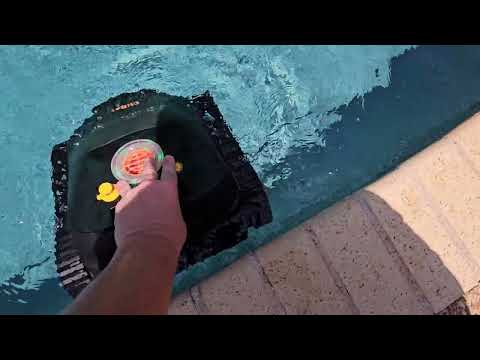
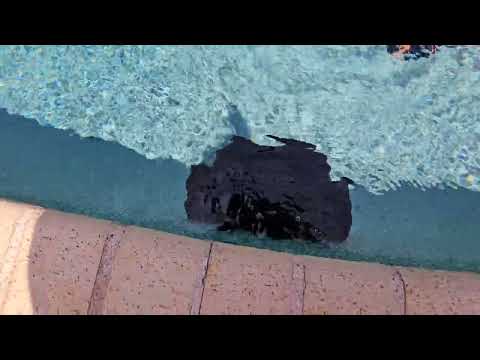
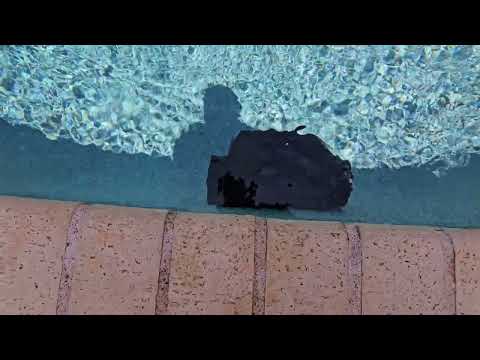
Once I put it in the water, the robot sank to the bottom and started its route. It climbed from the floor to the top of the wall, briefly poked above the surface, then traveled back down. At the bottom, it turned slightly and climbed again beside the previous route. That small repositioning created overlap between passes rather than repeatedly scrubbing one narrow strip.
That is the part I liked most. A pool wall cleaner needs a repeatable pattern, not just the ability to make one impressive climb.
Waterline cleaning is the real test
The waterline is where a lot of pools start looking tired. Oils, pollen, dust, and whatever else lands in the pool tend to collect there. You can scrub it by hand, of course, but that gets old fast.
At the top of its climb, the CliBot came slightly out of the water. The soft upper brushing area agitated the surface around the waterline before the robot headed back down. It did not just drive to the top and immediately fall away. It made contact where I wanted it to make contact.
My pool was overfilled after a storm, so the waterline during this run was higher than usual. That changed exactly where the robot was brushing. Still, I could clearly see the robot reach the top edge of the water and work that area. In a normally filled pool, that is the zone where the usual scum line tends to form.
One practical point: brushing and removing heavy, established staining are not always the same thing. I saw the CliBot agitate the waterline and climb consistently, but I did not use it on a thick algae bloom or a badly baked-on ring. Keep normal chemistry and circulation in line. A robot is a maintenance tool, not a substitute for fixing a neglected pool.
Why wall-only mode is more useful than it sounds
Wall-only mode is the feature that makes this cleaner more interesting for weekly maintenance. If your floor is already under control but the walls are getting slick or the waterline needs attention, you can send the robot after that specific task.
I would use a dedicated wall cycle when the pool looks fine from across the yard but starts feeling like it needs a brush around the perimeter. It is also a sensible follow-up after wind, rain, high swimmer traffic, or a stretch of neglected maintenance.
The unit also has separate floor and wall selections, plus a combined cleaning option Scott refers to as the classic mode. So the basic approach is straightforward:
- Use wall-only mode when the vertical surfaces and waterline are the priority.
- Use floor cleaning when debris has settled on the bottom.
- Use the combined mode when the whole pool needs routine attention.
That flexibility is more practical than a cleaner that gives you one mystery cycle and hopes it happens to suit the mess you have.
What I liked about the CliBot design
The treaded tires and large roller brushes are not just cosmetic. In my pool, the robot handled the transition from the floor to the wall and stayed on its vertical path. It also worked through repeated upward passes without me needing to guide it.
The controls were simple, too. I selected the wall setting, put it in the pool, and let it go. No hose to connect, no pressure-side plumbing to sort out, and no manual wall brushing during the run. Cordless pool robots live or die by convenience, and this part was refreshingly uncomplicated.
I also liked that the cleaner slightly shifted its route at the bottom before coming back up. That overlap is a small detail, but it is how a wall-cleaning cycle starts to cover an area instead of creating a few clean racing stripes.
+ Pros
- Climbed the wall successfully in my inground pool.
- Dedicated wall-only mode targets vertical surfaces without running a full floor cycle.
- Reached slightly above the water surface and agitated the waterline area.
- Repositioned between passes to create useful overlap.
- Large front roller brushes and tread-style tires supported its wall-cleaning route.
! What to know
- My pool was overfilled after a storm, so the waterline it cleaned was higher than normal.
- Confirm runtime for the exact version before ordering: my wall-mode discussion referenced three hours, while a current retailer listing states up to 120 minutes in certain applications.
- Confirm compatibility with your particular pool shape, surface, and wall transitions, especially for above-ground pools.
Who should consider this pool cleaner?
I would consider the CliBot if you have an inground pool and your main goal is to reduce the recurring chore of brushing walls and working the waterline. It makes the most sense for someone who wants a cordless robotic cleaner with a dedicated wall-focused cycle rather than a floor-only unit.
It can also be relevant for above-ground pool owners, since the product is presented for inground and above-ground pools. But pool shapes, wall materials, slopes, and transitions vary a lot. Check that the exact model suits your pool before ordering. “Above-ground compatible” is not a magic phrase if your pool has an unusual shape or surface.
This is also a good fit if you prefer targeted cleaning. Maybe the floor is clean because you already vacuum it regularly, but the waterline is where you spend your Saturday morning. In that case, wall-only mode is the point.
Runtime and buying details to confirm
There is one detail I would verify before you buy: runtime. During my wall-only demonstration, I described the cleaner as running for three hours on that mode. A current retailer listing for this product identifies it as a cordless, dual-motor cleaner with one-button operation and states up to 120 minutes for above-ground and flat in-ground pools.
Those details do not line up cleanly, so confirm the manual and current listing for the exact CliBot configuration you are ordering. Runtime can vary by mode, pool conditions, and version. Do not make a purchase decision assuming a particular cycle length until that part is clear.
I also did not assess debris capacity, filter cleanup, charging, or full-cycle battery life here. My focus was wall travel and waterline contact, and that is where this robot gave me a useful answer.
Specs
| Spec | Detail |
|---|---|
| Product name | CliBot cordless robotic pool vacuum cleaner |
| Pool types presented | Inground and above-ground pools |
| Drive design | Caterpillar-style treaded tires |
| Brush design | Large front roller brushes with a soft upper brushing area |
| Control options | Four modes with separate floor and wall indicators |
| Wall cleaning | Dedicated wall-only mode |
| Retailer-listed motor configuration | Dual motors (manufacturer/retailer claim) |
| Retailer-listed operation | One-button operation (manufacturer/retailer claim) |
| Retailer-listed runtime | Up to 120 minutes for above-ground and flat in-ground pools (manufacturer/retailer claim) |
My take after watching it work
For wall cleaning, the CliBot did not need a long sales pitch. I watched it sink, climb, brush at the waterline, descend, reposition, and repeat. That is exactly the sequence I want from a robotic pool wall cleaner.
Could you still need a manual brush sometimes? Sure. Tight corners, steps, stubborn buildup, and a pool that has gone green are their own problems. But for routine wall maintenance, this can take a very repetitive job off your list.
Scorecard
Climbed from the floor to the top of my pool wall repeatedly.
Rose slightly above the surface and agitated the waterline area.
Wall-only mode is useful when vertical surfaces are the priority.
Shifted slightly between climbs to create overlap.
Confirm runtime and exact compatibility for the model you order.
Frequently asked questions
Can the CliBot clean the pool waterline?
Yes, in my pool it climbed high enough to briefly protrude above the water surface. The soft upper brushing area agitated the waterline area before the robot traveled back down the wall.
Does this robot clean only walls?
It has a wall-only mode, which is the mode I used. The controls also indicate separate floor and wall selections, and there is a combined cleaning mode for floors and walls.
Will it climb every type of pool wall?
It successfully climbed the wall in my pool. I would still confirm compatibility for your specific pool surface, shape, depth changes, and wall transitions, especially for an above-ground pool or a pool with unusual geometry.
How long does the CliBot run?
Confirm this for the exact version you are considering. I referenced a three-hour wall-only cycle during my demonstration, while a current retailer listing states up to 120 minutes in certain pool applications.
Final recommendation
If walls and the waterline are the chores you hate most, the CliBot is worth a close look. I saw real wall climbing, useful pass overlap, and brushing at the top of the water. That is a much better starting point than a robot that only cleans the floor and calls it a day.
Just verify the exact runtime and pool compatibility before committing. If those match your setup, this is a sensible cordless option for keeping wall maintenance from becoming a weekly hand-scrubbing project.
As an Amazon Associate I earn from qualifying purchases.