How to Clean Pool Steps With a Cordless Vacuum
The Aiper Pilot X1 made short work of curved pool steps in my hands. Its pole reach, swivel head, and shallow-water mode solve a job that many floor robots miss.
Affiliate disclosure: As an Amazon Associate I earn from qualifying purchases. This article may contain affiliate links, which means I may earn a commission at no extra cost to you.
Pool steps are one of those small maintenance areas that can look worse than the rest of the pool. Dirt settles on the treads, leaves land in the corners, and the surface can get slimy. Meanwhile, a floor-cleaning robot may keep the main floor presentable while leaving the staircase alone. If you are searching for how to clean pool steps with a cordless vacuum, a handheld tool with enough reach can be a much simpler answer than setting up a full manual-vacuum routine for a few dirty steps.
I used the Aiper Pilot X1 handheld cordless pool vacuum on curved in-ground steps, around their rounded edge, and briefly on a spot on the pool floor. The job was straightforward: use the shallow setting on the short step, sweep the step surfaces and edge, extend the pole to reach the lower step, and empty the collected material from the cup afterward. The Pilot X1 is not a replacement for normal circulation, brushing, filtration, or a full-pool cleaner. Its appeal is that it addresses the awkward small zones those other tools may miss.
A practical cordless spot-cleaner for pool steps, rounded edges, tanning ledges, and small problem areas that a floor robot may leave behind. The long pole and swivel head were the difference-makers in my step cleanup.
As an Amazon Associate I earn from qualifying purchases.
| Type | Handheld cordless pool vacuum |
|---|---|
| Best use | Steps, shallow ledges, edges, and spot cleaning |
| Pole reach | Stated 8.3-foot telescoping reach |
| Head design | Swiveling head for curves and edges |
| Debris handling | Removable, rinseable debris cup |
| Included accessory | Algae-filter sleeve |
How I cleaned curved pool steps with a cordless vacuum
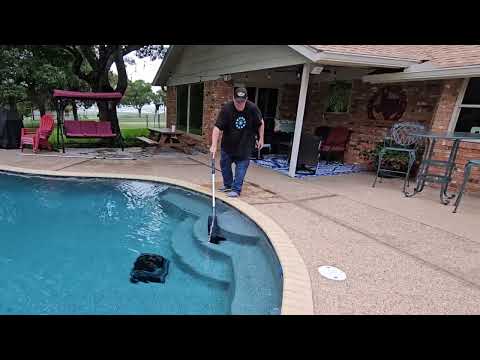
The first feature that changed the job was the attached telescoping pole. I extended it to its stated 8.3-foot reach. That allowed me to work toward the lower step without bending over the pool edge. For this particular task, reach is not just a nice extra. A short handheld tool can leave you leaning over the coping or working from an awkward position when the dirty area is farther down the staircase.
The Pilot X1 has two depth-related operating options. I started it on the low setting while it was in the short, shallow step. That is the setting I used to begin cleaning the step area. When I wanted to go farther down, I changed to the option intended for a more deeply submerged vacuum. The exact depth thresholds were not stated, so I would treat mode selection as a basic part of using this product rather than assuming one mode fits every location in the pool.
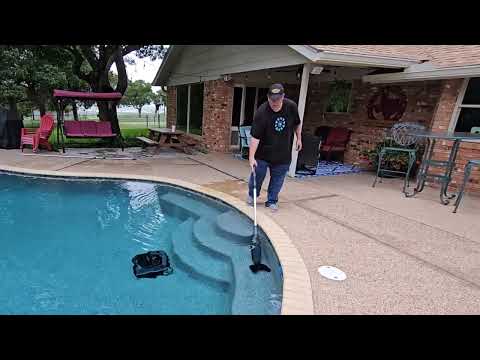
On the steps, I swept the vacuum across the treads, followed the rounded perimeter, and worked down to the lower step. This pool had curved geometry rather than a simple square corner, so the swiveling head mattered. It let me follow the shape instead of continually repositioning a fixed head against the edge. I was able to get around the curved area and cover the demonstrated step surfaces quickly.
That is the useful distinction between a dedicated step-cleaning pass and hoping a floor cleaner will do it. Steps have their own treads, edges, and changes in depth. They also tend to be a place where people enter and leave the pool. A cordless vacuum lets me focus only on that small area, collect the debris there, and move on rather than turning a spot-cleaning job into a whole-pool setup.
After the steps, I moved the unit farther into the pool and briefly cleaned a small floor spot. The long pole reached a meaningful distance out from the edge, including a portion of the deeper floor. I would frame that as occasional spot-cleaning reach, not as evidence that this replaces a cleaner built to cover an entire pool floor. In my use, it was a convenient way to address a specific area after finishing the stairs.
Why pool steps need their own cleaning tool
Pool steps collect material differently from the broad open floor. Falling debris can settle on each horizontal tread. Debris can lodge around the rounded edge or where the step transitions to the wall. Foot traffic brings additional material into the area. I also called out the slimy buildup that can develop there. These are all reasons the steps may need attention even when the rest of the pool does not look especially dirty.
A floor robot can be a useful primary cleaner, but it may not climb steps. That does not mean the robot is failing at its intended job; it means steps are a separate cleaning problem. The Pilot X1 makes sense as an add-on for the owner whose main cleaner handles the floor but leaves a recurring mess on stair treads, a tanning ledge, shallow shelf, or a rounded transition.
A brush still has a place when material is attached to the surface and needs to be loosened. What I liked about this cordless vacuum for the loose material from the steps was that it collected the mess rather than merely moving it around in the water. The basic workflow was direct: sweep the area, remove the vacuum, and deal with what collected in the cup. For a small area, that can be more practical than pulling out hoses and setting up a manual vacuum.
The cordless format also kept the work focused. There was no cord or hose to drag across the deck for the step pass I did. I could use the pole where the distance called for it and keep the tool on the job at hand. That is the strongest case for this product: frequent, contained cleanup in places that are annoying enough to notice but too small to justify a larger cleaning setup.
Using the right depth setting on steps and deeper water
The depth-related settings are an important buyer consideration because the Pilot X1 is intended to operate differently in shallow water and when it is more deeply submerged. I used the low setting in the short, shallow step. Before moving farther down into the pool, I changed modes. That sequence matched the changing water depth rather than treating the control as a one-time choice.
For pool owners, the practical takeaway is simple: identify whether the area is a shallow step or shelf versus a deeper location, then choose the operating option that corresponds to where the vacuum is sitting in the water. This is particularly relevant in a pool with several steps, where the top tread may be very shallow and the lower step may put the unit substantially deeper.
I cannot provide a numerical shallow-water limit or a numerical minimum depth for the deeper setting because those details were not established in my use. I also would not assume the demonstrated result answers every pool-layout question. What I can say is that the shallow setting worked on the short step I cleaned, and changing modes was necessary as I moved toward the deeper area.
Emptying the debris cup after step cleaning
Once I finished cleaning, I pulled the Pilot X1 out of the water, turned it off, and let water drain from the unit. This is worth building into the cleanup routine. The debris cup can retain water, and allowing it to drain first makes the next part less messy.
I opened the compartment, removed the cup, and could see collected material from the steps inside. I dumped the debris out, rinsed the cup, and reinstalled it in the vacuum. It is a simple maintenance arrangement: the collection cup comes out, gets emptied and rinsed, then goes back in. There is no bag system involved in the process I used.
One small but realistic expectation is that debris does not disappear when the cleaning pass ends. It remains in the cup and needs to be removed before reassembly. That is normal for a handheld vacuum, but it is part of ownership. If you want a tool for quick step cleanup, you should also be comfortable doing this short empty-and-rinse routine after using it.
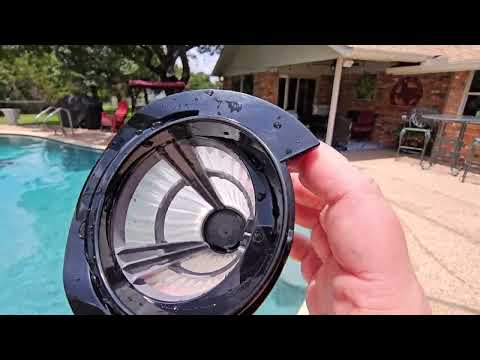
The Pilot X1 also includes an algae-filter sleeve that fits over the debris cup. I showed the sleeve and its fit over the cup. It is a relevant included accessory for owners looking at finer green material, but I would not make it responsible for solving an algae problem on its own. Pool chemistry, brushing, and filtration are still the foundation of algae control. This is a cleanup tool, not an algae cure.
+ Pros
- Telescoping pole with stated 8.3-foot reach helped me reach the lower step without bending over.
- Swiveling head followed curved step edges well.
- Shallow operating setting worked for the short, shallow step I cleaned.
- Cordless design made step and spot cleaning simple.
- Removable debris cup was easy to empty, rinse, and reinstall.
! What to know
- Choose the operating mode that matches the vacuum's water depth; I changed modes before moving into deeper water.
- Let the vacuum and debris cup drain before opening the cup.
- The included algae-filter sleeve fits over the debris cup, but it does not replace proper pool chemistry, brushing, and filtration.
Where the Aiper Pilot X1 fits in a pool-cleaning routine
I would consider the Aiper Pilot X1 if the persistent trouble spots in your pool are step treads, lower steps, rounded edges, tanning ledges, shallow shelves, or a small patch of debris that your existing cleaner leaves behind. The pole reach and swivel head are the features that made it especially suited to the curved steps I cleaned.
It is also a reasonable fit for an owner who wants to react to a small mess without committing to a bigger cleaning session. For example, debris may settle on the bottom step, or a few leaves may gather in one reachable floor spot. In that situation, I could take out the cordless vacuum, use the pole to reach the area, collect the material, and empty the cup. The tool makes sense when the job is targeted and contained.
It is less suited to buyers expecting proof of large-scale cleaning capacity. I used it on the curved in-ground steps and briefly on the floor, not through extended whole-pool sessions. I did not establish battery runtime, recharge time, maximum debris capacity, or long-term durability. Suction performance beyond the light debris from the demonstrated steps was also not established. Those unknowns matter more if your goal is a primary pool vacuum rather than a companion tool for problem areas.
I also did not use it on vinyl steps. The product information presents the approach as applicable to concrete or vinyl steps, but my firsthand use here was on curved in-ground steps. Owners of vinyl-lined pools should keep that distinction in mind rather than reading my experience as a material-specific assessment.
Buyer decisions before choosing this cordless step vacuum
First, think about the part of the pool that actually frustrates you. If your main concern is open-floor coverage, a floor cleaner may remain the better first purchase. If the repeated issue is a staircase that the floor cleaner does not climb, the Pilot X1 addresses a more specific gap. It is most compelling when reaching down to lower steps and following curved or tight step areas are part of the job.
Second, account for the water-depth settings. The ability to use a shallow setting was helpful on the short step, but it comes with the responsibility to change modes when moving deeper. A pool with a shallow lounging ledge and deeper adjacent water is exactly the sort of layout where that distinction matters.
Third, plan for the post-cleaning routine. The cup is removable and straightforward to rinse, which I liked, but it retains water and contains the debris the vacuum collected. Letting the unit drain before opening the cup and then dumping and rinsing the cup are not difficult tasks. They are simply part of getting the vacuum ready for its next use.
Finally, keep the tool in the right category. I found it practical for step surfaces, edges, shallow zones, and a brief floor spot. I would not buy it on the expectation that one cordless handheld unit will replace every maintenance tool or every part of a pool-care routine. Its value is in making neglected small areas easy to clean often.
Specs
| Spec | Detail |
|---|---|
| Product | Aiper Pilot X1 handheld cordless pool vacuum |
| Power format | Cordless; charging connection shown |
| Pole | Attached telescoping pole with stated 8.3-foot reach |
| Operating options | Two depth-related operating modes |
| Vacuum head | Swiveling head |
| Debris collection | Removable debris cup |
| Filter accessory | Included algae-filter sleeve for the debris cup |
| Demonstrated surfaces | Curved in-ground steps and a brief pool-floor spot clean |
Scorecard
Quick work on curved treads, edges, and the lower step.
The stated 8.3-foot pole reach reduced bending and extended floor access.
Swivel head was useful around rounded step geometry.
Cup removes, empties, rinses, and reinstalls simply.
A strong fit for areas a floor robot may miss.
Frequently asked questions about cleaning pool steps
Can a cordless vacuum clean pool steps?
Yes. I used the Aiper Pilot X1 on an in-ground pool’s curved step treads, rounded edge, and lower step. The shallow setting worked on the short, shallow step, while the swiveling head was useful for following the curved shape. The attached telescoping pole also helped me reach farther down without bending over the edge.
Why do pool steps get dirty when the pool floor looks clean?
Steps can catch falling debris, receive regular foot traffic, and sit outside the path a floor-cleaning robot follows. They also have separate treads, edges, and transitions where material can settle. I noted that the steps can get slimy as well, particularly if a vacuum cannot climb them, so occasional direct cleaning is useful.
Can I use the shallow setting throughout the pool?
Not based on my use. I started on the low setting in the short, shallow step, then changed modes before moving into deeper water. The product has two depth-related operating options, and the appropriate setting depends on how deeply the vacuum is submerged. Exact depth thresholds were not stated.
Do I need to bend over to vacuum the lower pool steps?
Not necessarily. I extended the attached telescoping pole to its stated 8.3-foot reach. That helped me reach the lower step and a portion of the pool floor from the pool edge without bending over. Your exact reach will still depend on the shape and depth of your pool and where you are standing.
How do you empty the Aiper Pilot X1 after cleaning?
After use, I removed the vacuum from the water, turned it off, and let water drain out. I then opened the compartment, removed the debris cup, dumped out the collected material, rinsed the cup, and reinstalled it. Expect some retained water in the cup, so letting it drain before opening it is sensible.
Is the algae-filter sleeve an algae solution?
No. The included sleeve fits over the debris cup, but I would not treat it as a substitute for pool chemistry, brushing, and filtration. It is an accessory for the vacuum’s collection setup, while algae prevention and treatment remain broader pool-maintenance concerns.
Final recommendation for cleaning pool steps
The Aiper Pilot X1 is a sensible answer to a narrow but common pool-cleaning headache: dirty steps that your main cleaner does not handle. In my use on curved in-ground steps, the stated 8.3-foot pole reach helped with the lower step, the swivel head tracked the rounded area well, and the removable debris cup made the cleanup process uncomplicated.
I would recommend it to pool owners who need a cordless spot-cleaning tool for shallow steps, ledges, edges, and occasional reachable floor debris. Use the setting that matches the vacuum’s water depth, allow the unit and cup to drain before opening the compartment, and maintain realistic expectations. This is a targeted companion for neglected areas, not a replacement for every part of pool maintenance.
As an Amazon Associate I earn from qualifying purchases.