Cordless Pool Floor Cleaner: Is Scuba S1 Worth It?
The Aiper Scuba S1 handled a tricky pool floor, crossed a drain, and pulled out a nasty load of fine debris and dog hair.
Affiliate disclosure: As an Amazon Associate I earn from qualifying purchases. This article may contain affiliate links, which means I may earn a commission at no extra cost to you.
The Aiper Scuba S1 makes its strongest case as a cordless pool floor cleaner. I put it in floor-only mode, dropped it into my pool, and watched it settle to the bottom before beginning its route. It crossed my floor drain, treated walls and a sloped edge as boundaries, and came back with an algae-filter insert that was brown with grime, dog hair, and fine debris. For a pool owner whose recurring problem is what settles on the bottom, those are the details that matter.
A practical cordless pool floor cleaner for owners who want easy deployment, solid floor navigation, and optional fine-debris filtration. It handled my drain and unusual floor shape well; just plan to rinse the algae insert and recharge it after a run.
As an Amazon Associate I earn from qualifying purchases.
The Scuba S1 is not just a generic robot that happens to be cordless. Its practical appeal is the combination of no floating power cable, a dedicated floor setting, tractor-style tires, and a removable fine-filter insert. That combination gives it a clear job: collect material from the pool floor without making setup feel like another pool-maintenance chore.
| Type | Cordless robotic pool cleaner |
|---|---|
| Cleaning modes | Auto, floor-only, wall-only, vacation |
| Fine filtration | Removable algae-filter insert |
| Filter access | Top-access basket |
| Pool compatibility | In-ground and above-ground pools |
| Stated runtime | 3 hours; not timed in my run |
I kept this run focused on the floor setting. That is important context for the recommendation. The Scuba S1 offers auto, floor-only, wall-only, and vacation modes, but my firsthand observations are about floor navigation, drain crossing, filter access, and the debris I found afterward. If floor cleaning is your priority, that is useful evidence. If you are buying strictly for walls, waterline work, total coverage, or a particular battery result, I did not test those questions here.
My Aiper Scuba S1 floor-cleaning experience
I selected floor-only mode with the onboard control. The Scuba S1 has four mode choices: auto, floor-only, wall-only, and vacation. Auto splits its time between walls and floors, while floor-only keeps the cleaner aimed at the bottom. Since I wanted to see how it dealt with the debris and layout on my pool floor, floor-only was the sensible setting for this run.
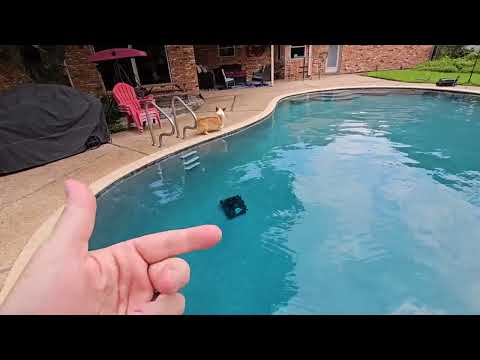
Deployment was straightforward. There was no cord to unwind, position, or keep out of the way on the deck. I placed the robot in the water, and it sank down to the pool floor before it started cleaning. That simple sequence is a meaningful advantage for anyone who puts off using a cleaner because getting it ready feels like too much work. With this one, mode selection is the main decision before it goes in.
Once it began moving, I could see the brushes facing forward as it worked. When it met a wall, it stopped, reversed, and turned itself around before continuing. Aiper calls this behavior WavePath 2.0, but the useful part is what I observed: it met the edge of the cleaning area and reoriented rather than remaining at the wall.
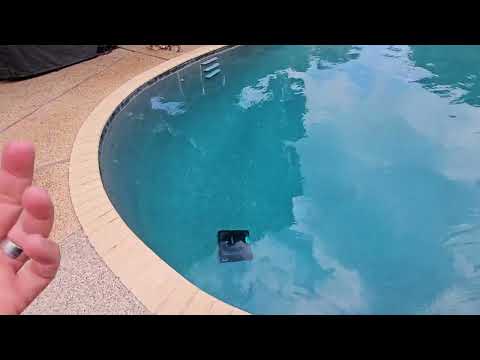
My pool floor is not a neat rectangle. There is a deep area and an inclined edge where someone can walk around the perimeter. In floor-only mode, the Scuba S1 recognized that incline as a boundary and turned back. That is exactly the behavior to understand before choosing floor mode. The robot was not trying to turn the angled section into part of a floor-cleaning route; it stayed on the flatter bottom area it was set to clean.
The floor drain was another relevant obstacle. The Scuba S1’s tractor-style tires traveled directly over my drain without getting stuck. That may sound minor, but a drain can be the sort of interruption that makes a pool robot frustrating to own if it regularly hangs up. In this run, it did not become an interruption at all.
I would not turn one run into a claim that every pool shape, drain, transition, or debris load will behave identically. Pool layouts differ. Still, my pool gave the Scuba S1 a real boundary, an incline, and a drain to deal with, and its floor-only behavior was consistent with the purpose of the setting. It kept moving across the bottom and turned around when the bottom route ended.
The removable algae filter is the feature I would buy it for
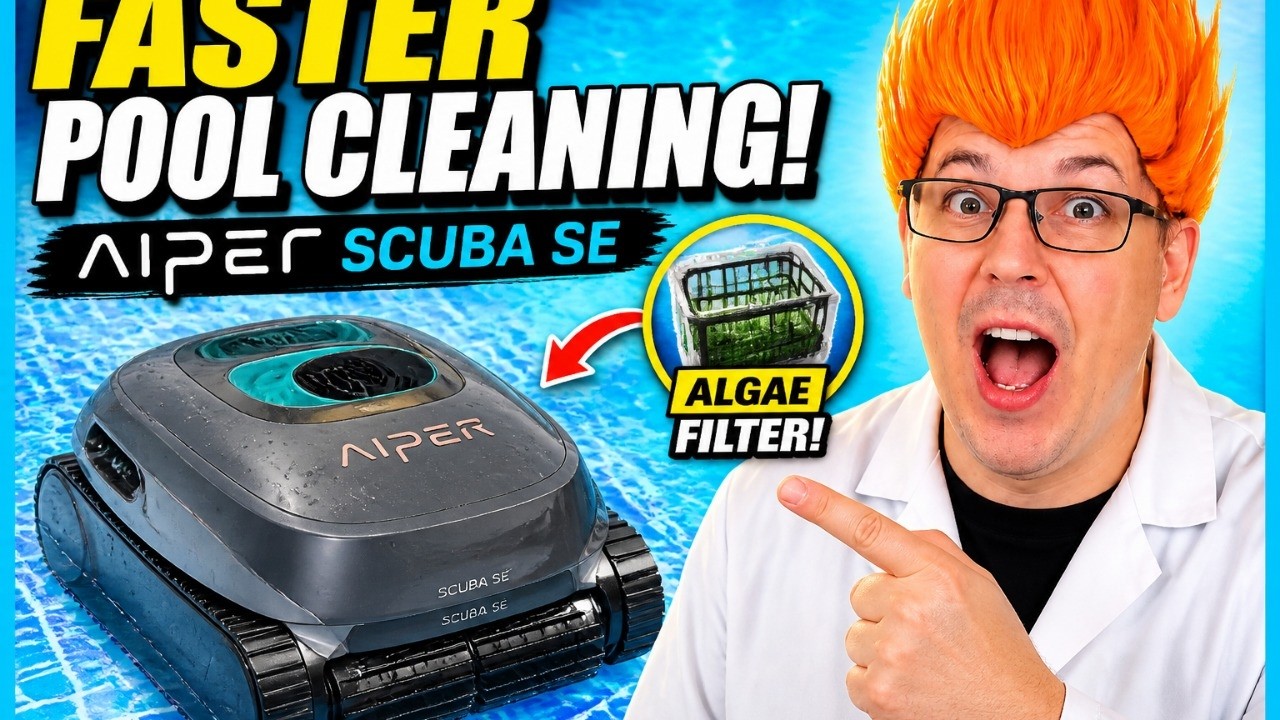
The standout feature is not dramatic from across the deck. It is the removable algae-filter insert inside the basket. Fine material can be the most annoying material in a pool: loose algae, fine dirt, sand, and hair are easy to see on the floor yet are not always the same thing as the larger debris a basic basket handles well.
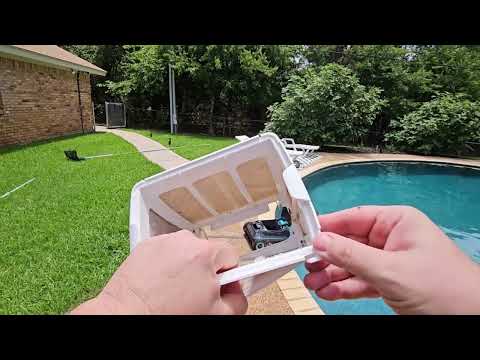
After the cleaning run, I opened the top of the robot and removed the basket and filter assembly. The insert, which started out white, was visibly brown and covered with dog hair and debris. It was a clear before-and-after result. Whatever the exact mix of material was, it had been in the pool and was now held in the filter assembly rather than left on the floor.
The insert comes out of the basket separately, which makes cleanup more practical. I could remove that fine-filter piece, rinse it, and reinstall it. It needs a thorough rinse after a dirty run because catching fine material means the fine material remains in the insert. Scott recommended a high-powered sprayer for clearing embedded debris; use appropriate care with any water equipment and follow the cleaner’s care guidance.
Just as important, the insert is optional. I can remove it when the objective is simply to collect standard debris, then put it back when algae, loose sand, or fine dirt is the problem. That flexibility is more useful than treating filtration as a fixed, one-size-fits-all setup. A pool with mostly larger debris does not necessarily need the same arrangement as a pool that has a visible layer of fine material on the bottom.
For my buying decision, this is why the Scuba S1 is more compelling than a cordless robot judged only by whether it drives around. It did navigate the floor well in my run, but the dirty insert connected that movement to a useful outcome. I could see what it had collected, remove the component that held it, and clean that component separately.
+ Pros
- Crossed the demonstrated pool floor drain without getting stuck
- Turned around reliably at walls and inclined pool edges in floor-only mode
- Optional algae-filter insert collected visible fine debris and dog hair
- Top-access basket makes filter removal straightforward
- Fine-filter insert can be removed for standard debris-only cleaning
! What to know
- In floor-only mode, inclined pool edges are treated as boundaries, so the robot turns back rather than continuing onto them.
- The fine algae-filter insert needs a thorough rinse after use because it can hold embedded debris.
- The robot needs recharging before the next cleaning cycle.
Who should consider this cordless pool floor cleaner?
I would point the Scuba S1 toward owners who want routine floor cleanup without a hose or a floating power cable. It makes the most sense when the pool floor is the regular maintenance headache and when fine debris is part of that headache. Easy deployment is valuable, but it is especially valuable when the cleaner also gives you a way to choose between ordinary debris collection and finer filtration.
- In-ground pool owners focused on the bottom: My hands-on run was in an in-ground pool, where it navigated an unusual floor shape and crossed a drain.
- Above-ground pool owners: The Scuba S1 was identified as suitable for above-ground pools as well. My direct observations, however, came from the in-ground pool run.
- Owners dealing with loose algae, sand, fine dirt, or hair: The removable algae-filter insert is the relevant feature here. It collected visibly dirty material and dog hair in my run.
- People who want mode choices: The onboard control provides auto, floor-only, wall-only, and vacation settings, so the product is not restricted to a single cleaning selection.
- Anyone tired of a corded routine: I dropped it into the water and let it sink; there was no cable management involved in the observed setup.
I would be more cautious if wall cleaning is your sole reason to buy. There is a wall-only setting, and auto mode divides time between walls and floors, but I used floor-only in this run. I cannot say how wall or waterline cleaning performs from my floor-cleaning results. The same applies to vacation mode: it is available, but its intended behavior was not explained in the source I used.
There are other questions I would keep separate from this review. I did not time a full cleaning cycle, establish total coverage in a specific pool, test battery life under different conditions, or evaluate charging time. I also did not test larger leaves, heavy debris loads, long-term durability, or pool-size limits. Those may matter to a particular buyer, but they are not reasons to rewrite the straightforward floor result I saw into a broader claim.
Setup, emptying, and maintenance after a run
A robot is only convenient if the routine around it stays convenient. In my use, the sequence was clear: choose the mode, place the Scuba S1 in the pool, let it sink and clean, then open the top when the run is over. The basket/filter assembly is accessible from above, so I did not have to flip a wet cleaner over simply to get at what it collected.
That top-access arrangement matters most when the fine insert is dirty. I removed the basket, took out the algae-filter piece, rinsed it separately, then reinstalled it. The visual condition of the insert made the maintenance requirement obvious. Fine filtration is useful precisely because it catches small material, and that small material has to be cleaned out afterward.
The filter choice also gives me a simple decision before later runs. If I am dealing primarily with ordinary debris, I can use the standard basket arrangement without the algae insert. If the pool has loose algae, fine dirt, or sand that I want to target, I can reinstall the insert. That is not a complicated maintenance system, but it does ask the owner to pay attention to the kind of debris actually in the pool.
After cleaning and rinsing, the Scuba S1 needs charging before its next cycle. The stated runtime is three hours, but I did not independently time a full runtime in my pool. I would treat three hours as a stated figure, not as a result I measured. In practical terms, cordless convenience includes charging discipline: it is easier to deploy without a cable, but the unit must be charged when you are ready to use it again.
Specs
| Spec | Detail |
|---|---|
| Product | Aiper Scuba S1 Robotic Pool Cleaner |
| Power style | Cordless, rechargeable |
| Selectable modes | Auto, floor-only, wall-only, vacation |
| Filter system | Top-access basket with removable algae-filter insert |
| Fine-material use | For loose algae, sand, and fine dirt when insert is installed |
| Drive style | Tractor-style tires |
| Stated runtime | 3 hours (stated, not independently timed) |
How floor-only mode changes the buying decision
Floor-only mode is a focused tool rather than a promise that every surface will be cleaned in one pass. That distinction is useful for a pool with slopes, benches, transitions, or angled perimeter areas. In my pool, the Scuba S1 reached the incline, recognized it as a wall because it was in floor mode, and turned itself around.
If your goal is to concentrate a run on the bottom, that behavior can be a benefit. It keeps the robot working in the area selected instead of spending part of the cycle trying to climb away from the floor route. If your expectation is that an inclined surface should be cleaned as part of a floor cycle, it is a caveat to understand before buying.
Auto mode exists for owners who want the cleaner to split attention between walls and floors. That can be useful when more than one surface needs attention, but it also means the cleaner is not devoting the entire run to the floor. Floor-only makes the tradeoff simple: I chose the bottom, and I saw the robot behave like a floor-focused cleaner.
That focus is why I would match the Scuba S1 to the actual problem rather than to the longest possible feature list. For bottom debris and an awkward pool floor, the observed performance was relevant. For wall-only needs, waterline needs, or a question about exact total coverage, I would want information specific to those jobs before making the same recommendation.
Scorecard
Handled walls, slopes, and a floor drain in my pool.
The removable insert collected visible grime and dog hair.
Top access is easy, but the fine insert needs a thorough rinse.
Select a mode, drop it in, and let it sink.
Four modes give useful options, though I used floor-only mode.
Frequently asked questions
Does the Aiper Scuba S1 clean pool floors well?
In my floor-only run, yes. It navigated around walls and sloped edges, crossed the floor drain, and collected visible fine debris and dog hair in the removable filter insert. I also saw it turn back when it reached the inclined section of my pool, which kept it working on the floor area selected by the mode.
Can the Scuba S1 catch fine debris and algae?
It has a removable algae-filter insert intended for finer material such as loose algae, sand, and fine dirt. In my run, that insert came out brown and covered with dog hair and debris. The insert can be removed when the goal is standard debris collection rather than finer filtration.
Does the Aiper Scuba S1 get stuck on a pool drain?
It did not get stuck on my pool floor drain. I watched the tractor-style tires travel over it without an issue. That is a firsthand result from this particular pool, not a guarantee for every drain design or pool surface.
What modes does the Scuba S1 have?
The onboard control offers auto, floor-only, wall-only, and vacation modes. I used floor-only mode for this cleaning run. Auto splits time between walls and floors; I did not test the wall-only or vacation settings in this run.
Is the Aiper Scuba S1 for above-ground pools?
Yes. It was identified as suitable for in-ground and above-ground pools. My hands-on observations in this article came from an in-ground pool floor run, so that is the setting behind the navigation and debris-collection comments.
How do you clean the algae-filter insert?
Open the top of the Scuba S1, remove the basket/filter assembly, take out the removable insert, and rinse it thoroughly before reinstalling it. The insert was heavily soiled after my run, so this is regular maintenance to plan on when using finer filtration.
Is the three-hour runtime tested here?
No. Three hours was the stated runtime, but I did not time a full run. I would not use this review to estimate exact runtime for a particular pool, mode, or debris condition.
Final recommendation for floor-focused pool care
The Aiper Scuba S1 is a good fit if the pool floor is your ongoing problem and you want a cordless robot that does not complicate setup. In my pool, it handled an awkward floor layout, crossed the drain, turned back at walls and inclines in floor-only mode, and produced a visibly dirty fine-filter insert after the run.
The removable algae insert is the reason I would choose it for fine debris. It gives you the option to target loose algae, sand, fine dirt, and hair when that material is what is settling on the bottom, then remove the insert for a standard debris-focused cycle. That is a practical choice rather than a feature you have to use every time.
Buy it for straightforward cordless floor cleaning, top-access filter handling, and filtration flexibility. Keep the insert rinsed after dirty runs, recharge the cleaner before the next cycle, and select the mode for the surface you actually need to clean. If walls, waterline performance, exact coverage, or measured battery runtime are your deciding factors, those are separate questions from the floor-focused experience I had here.
As an Amazon Associate I earn from qualifying purchases.