Cordless Robotic Pool Cleaner: Is Gosvor Pivot Enough?
The Gosvor Pivot is a lightweight cordless robot that handled floor debris and climbed pool walls in my inground-pool cleaning run. Its rinsable bag is the practical standout, but this is not a waterline cleaner.
Affiliate disclosure: As an Amazon Associate I earn from qualifying purchases. This article may contain affiliate links, which means I may earn a commission at no extra cost to you.
If you are shopping for a cordless robotic pool cleaner because you are tired of dragging a corded unit around an inground pool, the Gosvor Pivot takes a refreshingly basic approach. I charged it, started it with one button, let it work around the pool, pulled it out after its run, and cleaned the removable bag. In that session, it traveled across the floor, climbed a wall, and collected fine debris, dog hair, leaves, and small white debris in its filter area.
The appeal here is not complicated navigation or a promise that one machine will eliminate every pool chore. The Pivot is a lightweight cordless cleaner for recurring floor and wall work. At about 10 pounds out of the water, it was easy for me to handle. The debris bag was also easy to reach, rinse, and reinstall without tools. Those are practical advantages when the cleaner will become part of a regular maintenance routine rather than an occasional rescue tool.
A solid fit for routine inground floor and wall cleanup if you want a lightweight cordless robot and do not need dedicated waterline scrubbing.
As an Amazon Associate I earn from qualifying purchases.
There is one buying limit I would put front and center: this is not a dedicated waterline cleaner. I watched it move up the wall to the surface and then go back down, but it does not travel along the waterline to scrub that area. If the waterline ring is your main frustration, that distinction matters more than the cordless design. If your priority is taking routine floor debris and wall cleaning off your list, the Pivot makes a more convincing case.
| Pool type | Inground pools |
|---|---|
| Power type | Cordless rechargeable |
| Weight | About 10 lb out of water |
| Cleaning coverage | Floor and walls; not waterline |
| Filter maintenance | Tool-free removable, hose-rinsable bag |
Who should choose this cordless robotic pool cleaner?
I would consider the Gosvor Pivot for an inground-pool owner who wants a simple cordless robot for routine cleanup and does not want to lift a bulky machine. The unit is notably light out of the water, and that made the basic jobs of carrying it to the pool, lowering it in, and retrieving it manageable for me. Its quick drainage when lifted out also helped make retrieval less awkward.
It is also a sensible match for someone who values a straightforward filter routine. The green bag/filter assembly visibly held what the cleaner picked up. I could remove the assembly, rinse it with a hose, see that it was clean, and put it back in place. That kind of direct maintenance is useful for everyday debris, especially when hair and fine material can be hard to notice on the pool floor itself.
This is not the cleaner I would select solely to solve a waterline problem. The Pivot climbed the wall, but the top of the water is its turnaround point rather than a surface it methodically works across. I would also set expectations around its movement: it does not follow a particular mapped pattern. It roams through its cleaning process rather than laying down neat, repeatable lanes.
That does not automatically make it unsuitable for a pool. It just makes this a buyer-fit decision. If you want a cordless helper for broad, repeated floor and wall work and are comfortable with a less structured route, the design makes sense. If you need systematic coverage claims, waterline scrubbing, or verified performance across every pool shape and surface, I did not test those situations and cannot say how it would perform there.
My setup experience with the Gosvor Pivot
The setup was appropriately simple. The charging connection is located under a cover on the unit. After charging, I used the single activation button. The blue status light flashed, giving me a clear indication that the cleaner had been started before it went into the water.
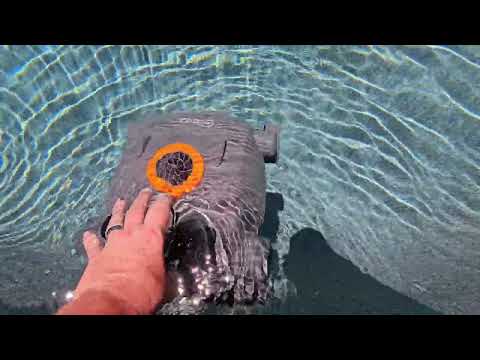
The important first-use habit is related to the Pivot’s low weight. I held it underwater briefly so it could take on water and sink to the bottom before releasing it. That was not difficult, but it is worth knowing before you buy. This is not a robot I would simply toss from the deck and expect to immediately settle into its work position. Giving it a moment to fill and sink is part of the normal startup routine.
Once it was moving, the cordless format kept the pool free of a trailing power cable. For me, that is the practical appeal of this category: the unit can be carried to the pool, activated, submerged, and left to its cleaning run without managing a cord around the deck. The tradeoff is that charging and runtime become part of ownership. The stated product figure is about three hours of charging for about two hours of cleaning time. I did not independently time either figure, so I treat both as stated specifications rather than measured results.
I also appreciated that the operating controls did not ask much of me. There was no complicated setup sequence during this session. One-button activation, a visible blue light, and the brief submersion step were the key parts of getting started. For pool owners who want to avoid turning a normal cleanup into a technology project, that simplicity is meaningful.
How it moved on the floor and walls
During the run, I watched the Gosvor Pivot travel over the pool floor and climb a wall. The large brushes were contacting the surfaces as it moved, and the gray sponge-like sections added additional scrubbing contact. The combination is intended to work the floor and wall surfaces while debris is pushed into the internal bag.
The wall behavior was especially useful to see in an actual pool. The cleaner moved upward, reached the surface, and then headed back down toward the floor to continue its process. Sensors near the top of the unit detect when it reaches or comes out of the water, prompting that return downward. That is what separates the Pivot from a floor-only machine in day-to-day use: it can address wall surfaces during the same run rather than leaving all wall work for a separate manual brush.
I would not confuse that with waterline cleaning. The robot reached the top of the water, recognized that position, and returned down. It did not scrub across the waterline. For routine wall maintenance, the climbing behavior is useful. For buildup right at the tile or surface line, I would plan on separate attention when needed.
Its cleaning route was not a particular pattern. I did not see it create the kind of tidy, mapped path that some buyers associate with robotic cleaning. In practice, that means I would judge it as a roaming floor-and-wall cleaner, not as a robot bought specifically for a predictable route. It still collected visible debris during my run, but buyers should keep the navigation style in mind when deciding whether it fits their expectations.
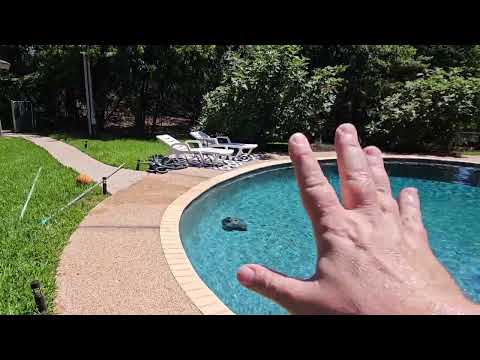
After the cleaning cycle, the cleaner was parked near a pool wall. That was the point at which I retrieved it for filter cleanup. Water drained out quickly as I lifted it from the pool, which made the transition from pool to maintenance area easier to handle.
What the removable bag collected
The filter result was the most concrete part of the session. Inside the bag/filter area, I found fine debris, dog hair, leaves, and a substantial amount of small white material. I could not identify exactly what all of the white debris was. Trees were being taken down nearby, including cedar trees, so there was extra organic material around the pool during the run. The important point is that the debris was captured in the bag area rather than merely stirred around in the water.
This is where the Pivot’s bag-based approach felt especially practical. A pool floor can look mostly clear while still holding fine particles, hair, and small fragments that are difficult to spot from above. Removing the filter assembly gave me a direct look at what the robot had collected. That feedback is useful because it tells you whether a run picked up material that might otherwise remain out of sight.
There is still manual work involved. A robotic cleaner does not empty itself, so the bag needs to be removed and rinsed after a run. I do not see that as an unusual drawback for this category, but it is part of the ownership routine. The good news is that access was tool-free and the collected material was visible, making the cleanup process feel direct rather than fussy.
Filter cleanup and reinstallation
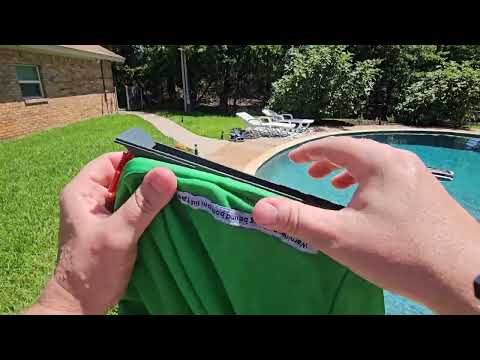
I accessed the green bag/filter assembly by turning the two top fasteners and releasing the side clips. The assembly then lifted out of the cleaner. That access method was simple enough that I did not need tools, and it gave me a clear view of both the bag and the debris it held.
I rinsed the assembly with a hose and could see it clean afterward. For a routine pool-cleaning workflow, this is one of the Pivot’s better features. A debris container that is hard to reach or difficult to wash can make even a capable robot annoying to use. Here, the bag was exposed, removable, and hose-rinsable.
Reinstallation was also manageable. I positioned the bag assembly, seated the front portion first, let the bag settle down into the unit, snapped the assembly into place, and secured the two fasteners. The details matter because a removable filter only stays convenient if putting it back is just as straightforward as taking it out. In my session, it was.
I would make rinsing and checking the bag part of the post-run habit rather than waiting until it looks overloaded. The source material supports that the bag caught a mixed load of debris in this run, but I did not test how capacity changes with different debris loads or how frequently every pool owner will need to empty it. Conditions such as nearby trees, pets, and the amount of fine debris in a pool will naturally affect that routine.
+ Pros
- Lightweight at about 10 pounds out of the water
- Cleaned the pool floor and climbed walls during use
- Captured fine debris, dog hair, leaves, and small particles
- Tool-free, hose-rinsable debris bag/filter assembly
- Simple one-button startup
− Cons
- Needs to be held underwater initially so it can fill and sink
- Does not provide dedicated waterline cleaning
Wall cleaning versus waterline cleaning: the key Pivot decision
The most important distinction with the Gosvor Pivot is simple: it is a wall cleaner, not a waterline cleaner. I saw the robot climb up the wall and return to the floor after reaching the surface. That is worthwhile behavior for routine wall cleaning, especially if you want help reducing the repetitive brushing that comes with an inground pool.
But the waterline is a separate job. The Pivot does not specifically clean along it, so I would not buy it expecting it to handle stubborn buildup around that line by itself. Buyers who are comfortable using a robot for the broad floor-and-wall work while dealing with the waterline separately can still find a good fit here. Buyers whose main pool-maintenance headache is the waterline should choose accordingly.
The same kind of expectation-setting applies to navigation. The Pivot is not presented by my use session as a cleaner that follows a fixed pattern. It moves, climbs, returns, and continues cleaning. I found that it collected a visible mixture of debris, but I would not turn that single run into a claim about complete coverage across every pool layout, slope, surface material, or debris condition. Those variables were not established in this session.
Everyday ownership considerations
The strongest ownership benefit I found was the balance of light handling and accessible maintenance. At about 10 pounds out of the water, the unit was easy for me to manage compared with a heavier robot. That matters not just at the beginning of a run, but also when it is time to retrieve the cleaner and take it over for bag cleanup.
At the same time, the lightweight build creates the initial submersion step. I held it underwater long enough for it to fill with water and sink to the pool floor. That is a small routine adjustment, not a difficult process, but it is real. It belongs in the decision because some buyers want a robot they can place in the water with no extra handling at all.
The remaining routine is uncomplicated: charge it through the covered port, activate it with the button, let it clean, retrieve it, remove the bag assembly, rinse the debris away, and reinstall the bag. I did not assess long-term durability, battery longevity, or long-term reliability of the wall-climbing behavior, so those are questions I cannot answer from this session. What I can say is that the core process of starting, observing, retrieving, and cleaning the unit was easy to follow.
Specs
| Spec | Detail |
|---|---|
| Product | Gosvor Pivot Cordless Robotic Pool Cleaner |
| Recommended pool type | Inground pools |
| Operation | Cordless, one-button activation |
| Cleaning surfaces | Pool floor and walls |
| Waterline cleaning | Not a dedicated waterline cleaner |
| Debris collection | Removable green bag/filter assembly |
| Filter access | Two rotating fasteners and side clips |
| Claimed recharge time | About 3 hours |
| Claimed cleaning time | About 2 hours |
Scorecard
Lightweight and quick-draining when lifted out.
I saw it travel the floor and climb a wall.
The bag assembly removes and rinses without tools.
One button and a clear blue status light.
It reaches the surface but is not a waterline cleaner.
Gosvor Pivot FAQ
Does the Gosvor Pivot clean pool walls?
Yes. I watched it travel across the pool floor, climb a wall to the surface, and then return down to continue its cleaning process. The large brushes and gray sponge-like sections are intended to scrub floor and wall surfaces as it moves.
Does the Gosvor Pivot clean the waterline?
No. It reaches the top of the water while climbing a wall, then returns down. It is a wall cleaner rather than a dedicated waterline-cleaning robot, so separate waterline care may still be needed.
What did the Gosvor Pivot collect in its bag?
After my cleaning run, I found fine debris, dog hair, leaves, and small white debris in the bag/filter area. I could not identify all of the white material, although nearby tree removal was adding organic debris around the pool.
Is the filter easy to clean?
Yes. I turned the two top fasteners, released the side clips, lifted out the removable green bag/filter assembly, and rinsed it with a hose. No tools were needed for the filter access, cleanup, or reinstallation.
How should the Gosvor Pivot be placed in the pool?
Because it is lightweight, I recommend holding it underwater briefly so it takes on water and sinks to the pool bottom before releasing it. That initial step helps it begin its cleaning run from the proper position.
How long does the Gosvor Pivot run?
The stated product figure is about three hours of charging for about two hours of cleaning time. I did not independently time the charge or runtime, so those are product figures rather than my measured results.
Final recommendation
The Gosvor Pivot is a practical cordless robotic pool cleaner for routine inground pool maintenance. I liked its lightweight handling, one-button startup, real wall-climbing behavior, and the easy-to-rinse bag assembly. Most importantly, it collected the mixed debris that tends to make pool upkeep frustrating: fine particles, hair, leaves, and small fragments.
Buy it for floor and wall maintenance, not for waterline scrubbing. It is best for someone who wants a simple cordless robot, is comfortable holding it underwater briefly at startup, and does not mind rinsing a removable bag after each run. If that matches your pool routine, the Pivot keeps the actual cleaning and post-run maintenance pleasantly straightforward.
As an Amazon Associate I earn from qualifying purchases.