Cordless Pool Wall Cleaner: Is the Scuba X1 Worth It?
The AIPER Scuba X1 climbed the wall, scrubbed on the way up, reached the waterline, and changed direction on its own. Its mode choices make it a practical fit for inground-pool owners who hate manual wall brushing.
Affiliate disclosure: As an Amazon Associate I earn from qualifying purchases. This article may contain affiliate links, which means I may earn a commission at no extra cost to you.
Cordless Pool Wall Cleaner: Is the Scuba X1 Worth It?
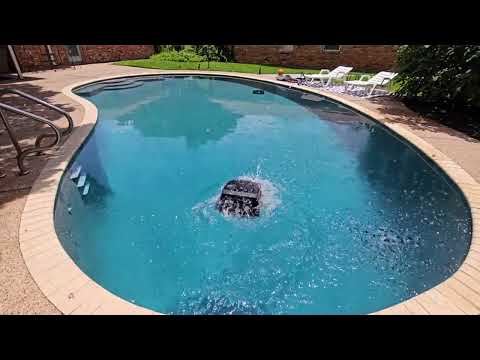
If your pool walls are the part of maintenance you keep postponing, the AIPER Scuba X1 makes a convincing case for a robot. I put it into auto mode, placed it in the pool, and watched it sink, find the wall, climb it, scrub on the way up, work briefly at the waterline, and turn itself for another pass. There was no cable attached during the run. That is the appeal of a cordless pool wall cleaner: less manual brushing and one less long cable to manage around the pool deck.
This is an inground-pool robot with separate wall-only, floor-only, and waterline-only settings, along with an automatic setting that divides its available cleaning time between walls and floors. That distinction is central to the buying decision. A wall-focused cleaner is most useful when it lets you spend the run where your pool needs it, instead of forcing every cycle to be the same general-purpose pass.
A strong cordless option for inground-pool owners who want to take routine wall brushing off the chore list. I watched it climb, scrub, reach the waterline, and redirect on its own; just choose the dedicated wall mode when walls are the priority.
As an Amazon Associate I earn from qualifying purchases.
| Pool type | Cordless robotic cleaner for inground pools |
|---|---|
| Cleaning modes | Wall-only, floor-only, waterline-only, and auto |
| Observed wall action | Climbed, scrubbed upward, reached waterline, and redirected |
| Stated runtime | Up to 180 minutes; auto divides time between walls and floors |
| Brushes | Roller brushes at the front and rear |
My main takeaway is simple: the Scuba X1 did the wall behavior that matters. It did not need me to guide it to the vertical surface, hold it there, or reposition it after it reached the top. I saw it travel from the lower wall upward while cleaning, spend a short time at the waterline, and change direction autonomously. For an owner who regularly reaches for a manual brush because the walls are being neglected, that is useful, practical help.
How this cordless pool wall cleaner handled the wall
I ran the Scuba X1 in automatic mode. In that mode, its stated three-hour total run time is divided between wall and floor work. Once it entered the water, it sank and began cleaning without a cord attached. It then moved through the pool, encountered a wall, and started climbing.
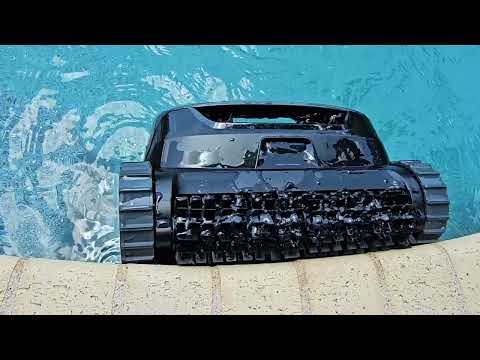
The key detail was that it was cleaning during the climb. The Scuba X1 has roller brushes at both the front and rear, and I could see it continue working as it traveled upward. That matters more than simply knowing a machine can reach the wall. A pool wall cleaner needs to maintain contact and keep moving through the job, because the point is to reduce the routine brushing that otherwise gets put off.
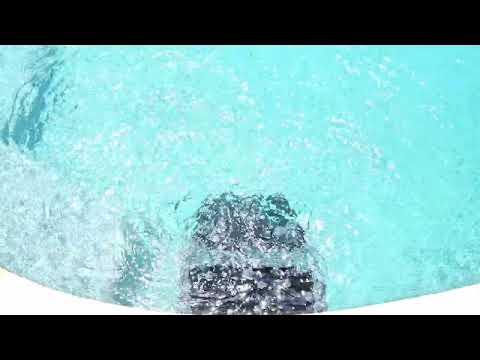
At the top of the wall, it worked briefly along the waterline before redirecting. The water in the pool was unusually high after rain that day, so I would not treat that particular waterline position as a normal, everyday setup. But the operating sequence itself was clear: it climbed, cleaned upward, reached the top, made a brief waterline pass, and turned for the next wall route.
AIPER calls its route planning WavePath 3.0. I described the floor route as an S pattern. On the wall, the repeated climbs and changes of direction looked more like a capital N. The branding is less important than the observed result: the robot was navigating the wall on its own rather than waiting for me to steer it or intervene between passes.
The Scuba X1 also has large caterpillar-style tires. Along with the front and rear rollers, those are functional details for a robot expected to work on both horizontal and vertical surfaces. I did not quantify how much existing dirt, algae, or staining it removed from the demonstrated wall, but I did see consistent upward cleaning movement, waterline contact, and autonomous turning during the run.
Choose the mode that matches the pool problem
The mode choices are the real selling point for me. Many pool owners want a robot to solve every cleaning job in one pass, but that is not always the best way to use the available battery time. The Scuba X1 offers wall-only, floor-only, waterline-only, and automatic settings. That lets you choose a cycle based on what actually needs attention.
- Wall-only: This is the setting I would choose when vertical surfaces are the priority. If the walls have been ignored after a busy stretch of pool use, wall-only mode makes more sense than splitting the run with an already-clean floor.
- Floor-only: This is the more logical setting when settled debris or general floor cleanup is the immediate issue. It keeps the cycle focused rather than sending the cleaner to the walls unnecessarily.
- Waterline-only: This provides a targeted choice for the ring at the top of the pool. I saw brief waterline work as part of a wall pass, while AIPER also provides a dedicated waterline setting.
- Automatic: This is the maintenance-minded option. It divides the available time between walls and floors, which is convenient when both surfaces need routine attention.
Auto mode is convenient, but it is a compromise by design. The total stated runtime is up to 180 minutes, and automatic mode allocates that time across wall and floor cleaning rather than devoting the full run to either one. If wall brushing is the chore you are specifically trying to avoid, wall-only mode is the more sensible choice. If the pool needs an all-around maintenance pass, auto mode gives you a hands-off way to cover both areas.
This flexibility also helps set reasonable expectations. A dedicated wall cycle and an automatic cycle are not the same job. Someone shopping for a cordless pool wall cleaner should not select auto mode, see a shorter amount of wall attention, and assume that reflects the product’s wall-only capability. Select the mode for the surface you want to prioritize.
What I liked during the pool run
The biggest convenience benefit was cordless operation. I placed the Scuba X1 in the pool and watched it work without a cable attached. For anyone who has dealt with a corded robotic cleaner, that means no cable stretched across the deck during the cycle and no cord to untangle before putting the machine away. It does not make every part of pool care disappear, but it removes a familiar hassle from the cleaning run itself.
I also liked that the wall-cleaning claim matched the behavior I saw. The Scuba X1 located the wall, climbed it, continued cleaning as it ascended, reached the waterline, and altered direction by itself. That is the exact sequence I would want to see before considering a robot as a substitute for some routine manual wall work.
The front-and-rear brush arrangement is another sensible feature. Having roller brushes on both ends means the cleaner has physical scrubbing contact while it moves. Scott also pointed out a debris filter and an algae filter. AIPER additionally lists a replaceable 3-micron MicroMesh ultra-fine filter, but I did not separately assess fine-debris capture, basket emptying, filter cleanup, or the effort required to maintain those filtration components after a run.
I would also count the autonomous route changes as a practical positive. The robot did not stop after reaching the upper part of the wall. It redirected and continued its pattern. For day-to-day maintenance, that kind of self-directed movement is what makes a robot feel like a useful tool instead of another device that demands supervision.
+ Pros
- Cordless operation eliminates cable handling during a cleaning run.
- Climbed the pool wall, scrubbed while ascending, and reached the waterline.
- Separate wall, floor, and waterline modes make it easier to target the job at hand.
- Front and rear roller brushes provide physical scrubbing contact.
! What to know
- Automatic mode divides the available runtime between walls and floors; select wall-only mode when wall cleaning is the priority.
- Waterline cleaning was brief during the observed wall passes.
- AIPER lists the Scuba X1 for inground pools, not above-ground pools.
Who should consider the AIPER Scuba X1?
I would point the Scuba X1 toward owners of inground pools who are tired of manually brushing vertical surfaces and want a cordless robot that can divide routine work between the floor and walls. It makes the most sense where wall cleaning is a recurring maintenance need rather than a once-in-a-while emergency task.
It is also a good match for buyers who value targeted cleaning modes. Some weeks, the floor may be the concern. Other times, the floor looks fine while the walls need attention. Being able to direct the run at walls, floors, or the waterline is more useful than a one-button machine that treats every cleaning cycle the same way.
It is not a replacement for all pool ownership tasks. Water chemistry, skimming, filter care, and regular visual inspection remain part of maintaining a pool. I would think of the Scuba X1 as a way to take repetitive cleaning work off the list, especially the wall brushing that can be easy to delay. That is a meaningful role without expecting the robot to solve every maintenance job.
Buyers with above-ground pools should look elsewhere. AIPER positions the Scuba X1 as an inground-pool cleaner. Likewise, if your deciding factors are recharge experience, long-term reliability, operating noise, or how it manages specific obstacles, I did not test those points here and cannot make a claim about them. The same applies to performance on different pool shapes, slopes, steps, wall materials, and lower water levels than the rain-filled pool used in this run.
Pool compatibility and manufacturer specifications
AIPER lists the Scuba X1 for concrete, fiberglass, vinyl, and tile pools. The company lists a maximum pool area of 2,150 square feet and a maximum pool length of 66 feet. Treat those as manufacturer compatibility guidance for your own pool, not as a guarantee that every pool layout will clean the same way. Shape, depth changes, obstacles, and surface conditions can all affect how a robotic cleaner travels.
AIPER also claims up to 180 minutes of battery life, 6,600 GPH suction, and a 5-liter top-load filter basket. Those are manufacturer specifications, and I did not independently measure runtime, suction, basket capacity in use, or charging behavior. The stated runtime is still useful for planning: in automatic mode, it is shared between the wall and floor portions of the cycle; the dedicated modes allow the available time to be aimed at a single surface.
The manufacturer promotes enhanced horizontal waterline cleaning under the Waveline 2.0 name. In my observed run, waterline cleaning was brief at the top of each wall pass. The dedicated waterline-only mode may be the better choice when that area is the specific priority, rather than relying on the brief waterline portion of an automatic wall pass.
Specs
| Spec | Detail |
|---|---|
| Product | AIPER Scuba X1 Cordless Robotic Inground Pool Cleaner |
| Pool type | Inground pools |
| Cleaning coverage | Floor, wall, and waterline modes |
| Runtime | Up to 180 minutes (manufacturer claim) |
| Maximum pool area | 2,150 sq ft (manufacturer claim) |
| Maximum pool length | 66 ft (manufacturer claim) |
| Listed pool surfaces | Concrete, fiberglass, vinyl, and tile (manufacturer claim) |
| Claimed suction | 6,600 GPH (manufacturer claim) |
| Filter basket | 5 L top-load basket (manufacturer claim) |
| Fine filter | Replaceable 3-micron MicroMesh filter (manufacturer claim) |
How I scored it for wall-focused maintenance
The wall-cleaning score reflects what I observed rather than a laboratory measurement of dirt removal. I watched the Scuba X1 climb the wall, brush on the way up, reach the waterline, and redirect without a cord attached. That is strong evidence for its basic wall-navigation and maintenance role.
I scored waterline coverage more cautiously because the observed work there was short. It reached that area and has a dedicated mode for it, but the automatic-mode pass I saw was not a long horizontal waterline session. The mode flexibility score is high because wall, floor, waterline, and auto settings give an owner a meaningful choice about where the cleaning time goes.
Scorecard
I watched it climb, scrub upward, and change direction on the wall.
No cable was attached during the demonstrated pool run.
Dedicated wall, floor, waterline, and auto settings are genuinely useful.
It reached the waterline, but the observed pass there was brief.
A practical way to reduce routine manual wall brushing.
Frequently asked questions about the Scuba X1
Does the AIPER Scuba X1 clean pool walls?
Yes. I watched it locate a pool wall, climb from the lower wall toward the top, clean while ascending, work briefly at the waterline, and change direction for another pass. That is the core reason to consider it if manual wall brushing is the part of pool care you want to reduce.
Does the Scuba X1 need a cord while it cleans?
No. I ran it without a cord attached in an inground pool. The cordless design removes cable handling during the cleaning cycle, which is one of the product’s most practical advantages for routine use.
How long does the AIPER Scuba X1 run?
AIPER lists up to 180 minutes of battery life. In automatic mode, that available time is divided between wall and floor cleaning. Wall-only, floor-only, and waterline-only modes let you direct a cycle toward one surface instead.
Can the Scuba X1 clean the waterline?
It has a waterline-only mode, and I saw it work briefly along the waterline during a wall pass. AIPER also promotes Waveline 2.0 waterline-cleaning capability. For the most focused attention at that level, the dedicated waterline setting is the logical option.
Is the AIPER Scuba X1 for above-ground pools?
No. AIPER positions it as a cordless robotic cleaner for inground pools. The company lists concrete, fiberglass, vinyl, and tile among the applicable inground-pool surfaces.
Will it replace every pool-cleaning task?
No. It can reduce repetitive floor, wall, and waterline cleaning work, but it does not replace maintaining water chemistry, skimming, filter care, or inspecting the pool. Its value is taking a meaningful cleaning chore off your regular list, not eliminating all hands-on maintenance.
Final take on the AIPER Scuba X1
The AIPER Scuba X1 does the part that matters for a wall-focused pool robot: it climbs the wall and cleans as it climbs. Add cordless operation, front-and-rear roller brushes, and modes that let you focus on walls, floors, or the waterline, and it looks like a practical maintenance tool rather than another deck-side gadget.
My advice is straightforward. If your inground-pool walls are regularly getting ignored because brushing them is a pain, the Scuba X1 is worth considering. Use wall-only mode when the walls need dedicated help, and save auto mode for general wall-and-floor maintenance. I saw it handle the core climbing, brushing, and turning work autonomously, which is exactly what I would want from a cordless pool wall cleaner.
As an Amazon Associate I earn from qualifying purchases.