Cordless Robotic Pool Cleaner for Inground Pools: Worth It?
The Gosvor Pivot keeps inground-pool cleaning simple: no hoses, easy lifting, real debris pickup, and wall scrubbing where it makes contact.
Affiliate disclosure: As an Amazon Associate I earn from qualifying purchases. This article may contain affiliate links, which means I may earn a commission at no extra cost to you.
The Gosvor Pivot is a cordless robotic pool cleaner for inground pools built around a refreshingly simple idea: put a self-contained cleaner in the water and avoid the hoses altogether. In my pool, I saw it move across the floor, pick up leaves, dead bugs, and tree debris, and climb a wall when it reached one. It also drained quickly after removal, which made the 10-pound drained unit easy to handle. The tradeoff is equally clear: its path is random, wall climbing happens on contact, and it is not a waterline-cleaning robot.
That combination makes the Pivot more interesting as a regular maintenance helper than as an all-purpose answer to every pool-cleaning task. If loose outdoor debris is what keeps collecting on the bottom, cordless operation and straightforward bag emptying can remove a lot of friction from the routine. If your main concern is a stubborn waterline or carefully directed coverage, this is a cleaner to evaluate with those limits firmly in mind.
A solid cordless helper for inground pools with everyday leaves, bugs, and tree debris. I liked the light 10-pound drained weight, quick drainage, and easy-to-remove debris bag, but expect a random route and spot wall cleaning rather than waterline cleaning.
As an Amazon Associate I earn from qualifying purchases.
| Pool type used | Inground pool |
|---|---|
| Power style | Cordless, rechargeable |
| Drained weight | 10 lb |
| Cleaning action | Pool floor plus wall climbing on contact |
| Debris system | Rear-access removable debris bag |
| Waterline cleaning | No |
Who should consider this cordless robotic pool cleaner for inground pools?
I would consider the Gosvor Pivot for an inground pool where the recurring job is loose debris: fallen leaves, insects, and the miscellaneous material that comes in from nearby trees. That debris can make a pool look neglected quickly, even when the larger pool-maintenance routine is otherwise on track. The Pivot’s demonstrated strength was gathering that kind of material from the pool during a cleaning run.
It also makes sense for someone who specifically wants to get away from hoses. A cordless cleaner has a different ownership appeal from equipment that needs a hose stretched out, connected, managed, and put away again. The Pivot has a charging connection on its back, then runs in the pool without a hose trailing behind it. That is the product’s most immediate convenience advantage.
Handling is another meaningful part of the decision. Once the water drained out, I found the unit lightweight. The stated drained weight was 10 pounds, and the water left the cleaner in about 10 seconds after I pulled it from the pool. For an owner who does not want removal to be a heavy, awkward end-of-cycle chore, that is a practical benefit rather than a minor detail.
I would not buy it expecting a cleaner that deliberately traces every section of every wall. Its navigation is random, so it works around the pool rather than following a mapped or directed coverage plan. It can climb a wall when it encounters one, but that is different from a machine that makes wall cleaning its primary, predictable route. It also does not clean the waterline.
My hands-on setup experience: no hose mess
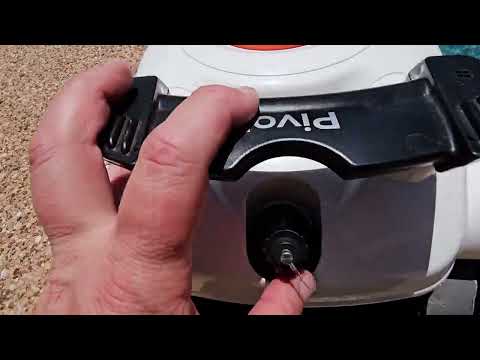
Startup was simple. I saw the charging connection on the back of the cleaner, activated the unit with one click, and a blue light came on. From there, I placed it in the pool, let it fill with water, and watched it sink to the bottom before beginning its cleaning run. There was no hose setup involved in that process.
That short sequence is important because it matches what many pool owners want from a maintenance cleaner: less equipment handling before the actual cleaning starts. The Pivot is not presented as a replacement for every pool-care tool or task. It is a cordless robot intended to work in the water, collect debris, and then be taken out and emptied after the run.
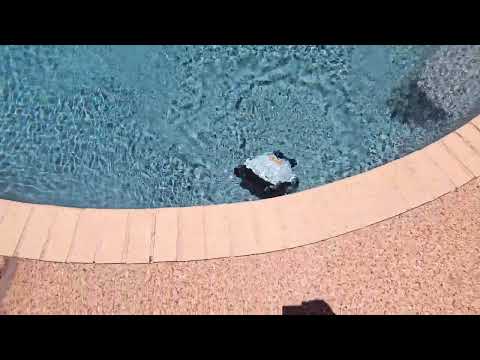
Once underway, I observed it travel across the pool floor. Its movement is not a rigid back-and-forth pattern, so I would not stand poolside expecting it to look methodical in the way a mapped cleaner might. Instead, it changes its course as it moves around. For routine cleanup, the useful question is whether it gets into the areas that hold debris and actually brings debris back to the bag.
My pool also had a rounded edge. Along that contour, the Pivot traveled at an angle. It looked a little cockeyed, but it was following the shape of an area where leaves and other material can roll through and settle. A cleaner moving at an angle on a rounded contour is therefore something I would expect in a pool with that shape, not a reason by itself to assume that cleaning has stopped.
The cordless design does not mean there are no ownership tasks at all. The unit needs charging, and debris still has to be removed after a run. But it does mean the daily physical setup is centered on the cleaner itself rather than on managing a long hose around the deck and pool.
Floor pickup is the main reason I would use it
The clearest result from my cleaning run was what ended up inside the cleaner. After it finished and parked in the pool, I lifted it out and accessed the rear debris compartment. The bag and the cleaner interior contained leaves, dead bugs, and other material that had fallen from trees. That is exactly the sort of loose debris that can accumulate between more involved pool-maintenance sessions.
I like that result because it connects the robot’s movement to a real chore. Seeing a cleaner travel around is less useful than seeing the debris it recovered. The Pivot was grabbing the everyday organic mess that had entered the pool, rather than merely circulating around it. For a pool exposed to trees, that can be the recurring cleanup burden that makes a robot worthwhile.
At the same time, I would keep expectations focused. This is a maintenance tool, not a substitute for all pool care. It does not replace managing water chemistry, running circulation, skimming when needed, or brushing parts of the pool that need attention. What it can do is take a repetitive debris-pickup job off the list and make it easier to keep the floor from becoming the place where leaves and bugs sit until the next manual cleanup.
I also would not assume anything beyond what I observed about its filtration. The run established that it collected visible leaves, bugs, and tree debris. It did not establish fine-particle filtration performance, so I cannot say how it handles material outside that demonstrated debris mix.
It climbs and scrubs walls—but not the waterline
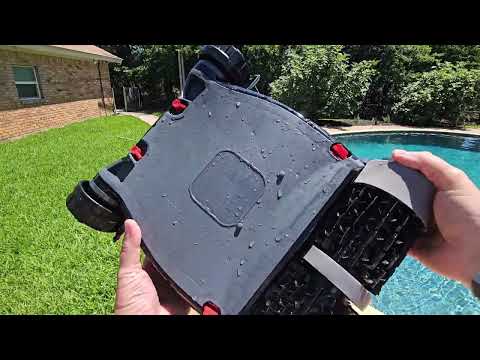
When the Pivot encountered a wall, I saw it climb. It has brushes and large gray sponge-like scrubbers, and the rear cleaning components contacted the wall during the climb. That contact provides agitation on the wall area the robot reaches, which can help with light buildup in those places.
The important buying distinction is that wall action is conditional on where the robot goes. Its travel pattern is random rather than directed. It is not set up to make a deliberate, guaranteed wall pass around the entire pool during each run. In practical terms, think of wall climbing as a useful added action when the Pivot reaches a wall, not as the sole reason to choose it.
It also does not clean the waterline. That limitation matters because the waterline is a specific cleaning target, often with its own type of buildup. The Pivot can scrub the wall surface it contacts below that line, but I would not describe it as a waterline cleaner or buy it for that purpose.
For my priorities, that is a fair compromise because the loose debris I wanted removed was on the pool floor. Still, buyers with a tile line or waterline that needs frequent dedicated attention should treat that as a reason to look for a cleaner with a different cleaning emphasis.
Removing and emptying the Pivot after a run
After the cleaning cycle, the Pivot parked in the pool. I pulled it out and watched the water drain away in about 10 seconds. Once drained, it was lightweight to hold, consistent with the stated 10-pound drained weight. That quick drainage changes the experience of lifting it out: instead of carrying a cleaner that is still full of pool water, I could wait briefly and handle the lighter unit.
The debris bag is accessed from the rear. I opened that section by releasing the latches and locking points, then removed the bag. This is a hands-on step in the normal ownership routine, and I would plan to inspect both the bag and the inside of the cleaner after use, especially when the pool has been collecting tree debris.
Emptying matters because the material I found was not limited to a couple of visible leaves. There were leaves, dead bugs, and other debris in the bag and interior. The benefit of the removable bag is that the collected mess has a defined place to go rather than requiring a more complicated teardown of the cleaner for ordinary cleanup.
Putting the bag back was manageable. I seated its edge in the groove, let the bag settle into the unit, and closed the locks. The detail worth remembering is simply to make sure the bag is seated properly rather than caught as the rear section is closed. Once it was installed and locked, the Pivot was ready for another cleaning session.
What the random navigation means in day-to-day use
Random movement should not be confused with the cleaner doing nothing. In my pool, the Pivot moved across the floor, reached a wall, climbed it, and collected debris. Those are useful results. But random movement does change how I would use it and what I would expect from a single cycle.
I would use it as a regular upkeep machine rather than wait for one run to produce perfectly even coverage. Because it is not following a mapped route, one area may receive more attention than another in a given pass. Repeated maintenance runs are the sensible fit for this navigation style, particularly in a pool where leaves and insects arrive continually.
Pool shape is relevant too. I observed angled travel around a rounded edge, so I would expect contours to influence the way the robot presents itself as it moves. I did not test the Pivot across different surface materials, slopes, steps, or other pool shapes, so I cannot make broader claims about performance in those conditions.
Several other ownership questions remain open as well. I did not establish battery runtime, recharge time, long-term durability, or ongoing maintenance needs. Those are reasonable things to investigate before buying, especially if they are more important to your routine than cordless convenience, simple debris pickup, and easier handling after drainage.
My buyer guidance for the Gosvor Pivot
I would choose the Pivot for a straightforward purpose: maintaining an inground pool that regularly receives leaves, bugs, and tree debris. Its cordless operation avoids hose handling, its floor movement and debris collection addressed that core job in my run, and its fast drainage made removal notably easier. The rear bag system also keeps the post-run cleanup understandable and accessible.
I would be more cautious if the reason for buying is waterline cleaning or precise route control. The product does neither in the observed use. It climbed walls it encountered and scrubbed contact areas, which is useful, but it did not follow a dedicated wall route and it did not address the waterline.
Ultimately, the right expectation is a low-fuss cordless helper, not a precision robot with every advanced capability. For the pool owner tired of hoses and tired of seeing loose outdoor debris sitting on the floor, that can be exactly the right category of cleaner.
+ Pros
- Cordless design eliminates pool-cleaner hoses
- Lightweight at 10 pounds once drained
- Collected visible leaves, dead bugs, and tree debris
- Climbs walls it encounters and scrubs the contact area
- Drains water in about 10 seconds after removal
- Rear-access debris bag is removable and reinstallable
! What to know
- The travel pattern is random rather than directed or mapped.
- Wall climbing happens when the robot encounters a wall; it is not a dedicated wall-cleaning route.
- It does not clean the waterline.
- On rounded pool edges, it may travel at an angle while following the contour.
Specs
| Spec | Detail |
|---|---|
| Product | Gosvor Pivot Cordless Robotic Pool Cleaner |
| Pool application | Inground pool |
| Power format | Cordless rechargeable |
| Weight | 10 lb when drained |
| Startup | One-click activation with blue status light |
| Cleaning surfaces | Pool floor and wall contact areas |
| Wall action | Climbs walls it encounters |
| Scrubbing components | Brushes and large gray sponge-like scrubbers |
| Debris collection | Removable rear-access debris bag |
| Waterline cleaning | Not provided |
Scorecard
Collected leaves, bugs, and tree debris in my run.
Quick drainage and 10-pound drained weight make removal easy.
One-click startup and cordless operation keep it simple.
Climbs and scrubs walls it reaches, but not the waterline.
Random movement is practical for maintenance, not precision coverage.
Frequently asked questions
Does the Gosvor Pivot clean pool walls?
Yes, it climbed walls when it encountered them. The rear brushes and sponge-like scrubbers contacted and agitated the wall during the climb. Because its path is random, it does not follow a dedicated wall-cleaning route, and it does not clean the waterline.
Does this cordless robotic pool cleaner for inground pools use hoses?
No. The Pivot is cordless, so there are no pool-cleaner hoses to connect or manage during a cleaning run. It has a charging connection on the back of the unit.
Is the Gosvor Pivot heavy to remove from the pool?
I found it easy to handle after it drained. The stated drained weight was 10 pounds, and I observed the water leave the unit in about 10 seconds after removal from the pool.
What kind of debris did it collect?
After the cleaning run, I found leaves, dead bugs, and other material that had fallen from nearby trees in the debris bag and cleaner interior. That supports using it for everyday loose outdoor debris rather than making claims about fine-particle filtration.
Does the Pivot follow a mapped cleaning pattern?
No. I observed a random travel pattern. It moved around the pool floor and climbed a wall when it encountered one, rather than following a directed or mapped coverage route.
Does the Gosvor Pivot clean the waterline?
No. It can climb and scrub portions of a wall that it reaches, but it is not a waterline-cleaning robot.
Final recommendation
I like the Gosvor Pivot for the focused job it is built to do: make routine inground-pool debris pickup less of a hassle. It is cordless, starts simply, collected the leaves and bugs I found in the pool, and was easy to lift once it drained. Those practical details are the value proposition here.
Buy it for regular floor cleanup with occasional wall scrubbing when it reaches a wall. Skip it if waterline cleaning, mapped navigation, or established performance on fine debris is your priority. For a pool with nearby trees and an owner who wants less hose-related hassle, the Pivot is a sensible low-fuss option.
As an Amazon Associate I earn from qualifying purchases.