Cordless Robotic Pool Vacuum: Easier Floor Cleaning?
The Aiper Scuba S1 handled routine floor debris in my inground-pool run, collecting big leaves, pollen, dirt, bugs, and dog hair without a hose.
Affiliate disclosure: As an Amazon Associate I earn from qualifying purchases. This article may contain affiliate links, which means I may earn a commission at no extra cost to you.
The Aiper Scuba S1 is a cordless robotic pool vacuum for the very specific pool chore that gets old quickly: cleaning routine debris off the floor without dragging out a hose. I used it in floor mode in an average-size inground pool, where it made repeated passes, turned at the wall, picked up both big leaves and fine debris, and parked near the edge when it was done.
That combination is the reason a cordless robot can make sense. Instead of connecting and moving a hose-based vacuum for every round of pollen, bugs, leaves, dirt, or pet hair, I could select a mode, lower the unit into the water, and let it work. It is not a replacement for every maintenance task, but for the floor-cleaning job I actually ran, it removed the visible mess and kept the after-cleaning routine simple.
A solid pick for inground-pool owners who want hands-off floor cleanup without dragging out hoses. In my run, the Scuba S1 left the floor looking clean and made basket cleanup simple.
As an Amazon Associate I earn from qualifying purchases.
The key qualifier is that this review is centered on floor mode. Aiper lists smart, wall-only, and eco modes as well, but I did not run those modes here. If your buying decision depends on dedicated wall or waterline cleaning, I cannot make a firsthand call on that from this floor-focused run. If your main problem is debris settling on the bottom, though, the result was encouraging.
| Type | Cordless robotic pool vacuum |
|---|---|
| Best demonstrated use | Routine inground-pool floor debris pickup |
| Cleaning pattern | Autonomous overlapping back-and-forth passes |
| Debris handling | Removable, rinseable basket |
| Retrieval | Hook-access point plus quick-release drainage |
| Modes | Floor mode demonstrated; smart, wall, and eco modes listed |
How this cordless robotic pool vacuum cleaned my pool floor
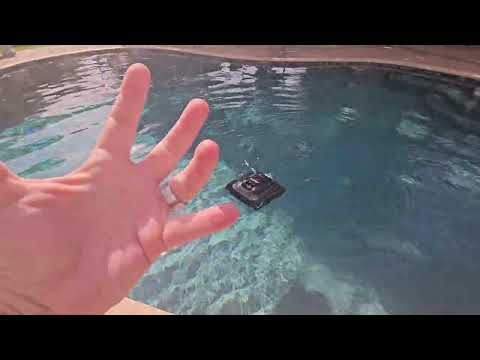
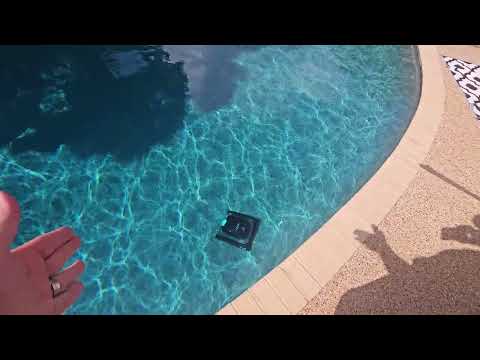
I selected the floor-only setting with the onboard controls and lowered the Scuba S1 into the pool. It sank before beginning its cleaning run. From there, it traveled in the direction of the front roller brushes, which are positioned to move debris toward the intake and basket area.
Its movement was easy to follow: the robot worked back and forth across the floor in an overlapping, S-like pattern. When it reached a wall, it stopped, turned itself around, and headed across the pool again. Aiper calls this wave-path navigation. The name matters less than the behavior I saw, which was repeated coverage rather than a cleaner simply wandering around the pool.
That repeated motion is useful in a routine cleaning cycle because pool debris does not land in one neat pile. Leaves can settle in one area while pollen, dirt, and bugs spread across the floor. The Scuba S1 kept making passes through the pool, giving it opportunities to collect what it encountered as it moved.
My pool has a bowl-shaped transition. During the floor run, the robot climbed slightly onto the curved wall area before changing direction. It was not an abrupt movement, and I viewed it as normal for this pool shape. That observation is worth mentioning because a buyer watching a floor-mode cycle might otherwise think the robot has selected the wrong task when it briefly rides up the curve.
I would still keep pool shape in mind before treating any navigation claim as universal. The source supports what I saw in this inground pool: back-and-forth floor travel, wall contact, automatic turning, and slight climbing on a curved transition. It does not establish how the robot will cover every slope, stair, corner, or unusual pool layout.
After the cleaning cycle, the pool looked great. I did not see leaves remaining on the bottom. For a floor cleaner, that visible before-and-after outcome is more useful than a feature list alone. The unit was dealing with ordinary backyard debris, not a sterile pool with nothing to collect.
What the Scuba S1 picked up in one cleaning run
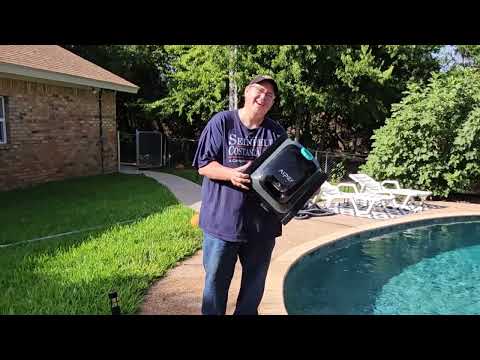
I was especially interested in the larger leaves. There were big tree leaves in the pool along with the regular small debris that accumulates outdoors. After opening the basket, I found two large leaves plus smaller material including dog hair, dirt, pollen, dead bugs, and other small debris.
That is a meaningful mix for a cordless robotic pool vacuum. Large leaves are an obvious test because they are easy to spot from the deck and annoying to remove manually. Fine material is just as important in day-to-day use, though, because pollen, dirt, hair, and bugs are what can leave a pool floor looking neglected even when there are no branches or big leaves in sight.
The front roller brushes are intended to sweep debris toward the collection area, and I could see the robot traveling brush-first as it cleaned. I am not assigning separate pickup results to each debris type beyond what appeared in the basket. What I can say is that the basket held both the large leaves I was watching for and the smaller debris that had been on the pool floor.
For my use, that made the Scuba S1 most appealing as a routine cleaner rather than a specialty tool. I would use a robot like this to stay ahead of ordinary accumulation: debris after a windy night, a layer of pollen, bugs that land in the water, or hair and dirt that make their way into the pool. That is a more practical expectation than assuming one cycle solves every possible pool-maintenance problem.
Retrieval and basket cleanup stayed straightforward
Cleaning performance is only part of the ownership experience. A robot can do a good job in the pool and still become frustrating if it is awkward to remove or unpleasant to empty. Here, the post-cycle process was simple.
At the end of the run, the Scuba S1 parked near the pool edge. I used the front retrieval point with a hook to bring it out. Once it was out of the water, I allowed water to drain through the quick-release drainage feature before opening the basket. Letting the water drain first made handling it more manageable.
The removable basket came out easily. I emptied the larger debris, then rinsed away the remaining hair, pollen, dirt, and other fine material. After rinsing, the basket was clean and went back into the robot without a complicated filter assembly or confusing sequence of latches.
That is an important convenience advantage for anyone deciding between automated cleaning and continuing to vacuum manually. The cleanup step still exists—you do have to empty and rinse the basket—but it is contained in one removable component. I did not need to deal with a hose setup before the cleaning cycle, and I did not have to sort out a complex filter system afterward.
The other side of cordless convenience is charging. After the basket was cleaned and reinstalled, the unit needed to be recharged before the next use. That is not a hidden drawback; it is simply the tradeoff for running without a hose. Buyers should plan for that step rather than expecting the robot to be ready indefinitely between cycles.
+ Pros
- Cordless operation eliminates hose setup for routine cleaning.
- Collected large leaves and fine debris in the demonstrated floor run.
- Autonomous back-and-forth floor pattern with wall detection and turning.
- Removable basket was easy to empty, rinse, and reinstall.
- Parked near the pool edge for retrieval after the cleaning cycle.
! What to know
- The battery needs charging after use.
- Retrieval requires a compatible hook at the unit’s front retrieval point.
- Floor mode was demonstrated; wall-only, smart, and eco modes were described but not used in this run.
- In a bowl-shaped pool, it may travel slightly up a curved wall section while running in floor mode.
Who should consider the Aiper Scuba S1
I would consider this robot if the recurring headache in your pool is floor debris and you want to avoid hose-based vacuuming. The demonstrated use case was an inground pool with a normal mix of leaves and smaller outdoor debris, and that is where it delivered its most useful result.
- A good fit for routine floor cleanup: It collected two large leaves as well as pollen, dirt, dog hair, bugs, and smaller debris in my run.
- A good fit for people who dislike hose setup: Cordless operation removes the need to connect and maneuver a vacuum hose for this routine task.
- A good fit for simple basket maintenance: The debris basket was removable, rinseable, and easy for me to reinstall.
- A good fit for owners who want automation: Once floor mode was selected and the robot was placed in the pool, it navigated and turned on its own.
- Less clear for specialized cleaning needs: I did not test steep slopes, stairs, tight corners, heavy algae, very fine sediment, or dedicated waterline cleaning.
It is also worth separating demonstrated findings from listed features. I used floor mode. The product information describes smart mode, floor-only mode, wall-only mode, and eco mode. Smart mode is described as splitting cleaning time between walls and floor, with a stated runtime of up to 2.5 hours. Eco mode is described as running 45 minutes every 48 hours over five days. Those can be useful options on paper, especially for someone away from home during the week, but they were not part of my hands-on cleaning result.
Navigation was useful, but pool shape still matters
The Scuba S1’s navigation behavior was one of the more reassuring parts of the run. I watched it make overlapping passes, encounter the wall, turn, and continue. That makes it better suited to regular floor coverage than a cleaner that looks active but spends too much time retracing an unhelpful path.
The bulldozer-style tires are intended to help the robot travel over pool surfaces and climb walls. In my pool, the relevant firsthand observation was modest: it crossed the floor and climbed a little way onto the curved wall section before turning. I would not stretch that into a claim that it will handle every transition equally well. The source does not establish its performance on steep slopes or difficult corners.
Aiper also states that the Scuba S1 can be used in inground or above-ground pools. My use was in an inground pool, so that is the environment behind the observations in this article. Above-ground buyers should treat compatibility as stated product information rather than assume that my inground-pool experience answers every fit question for their pool.
Modes and maintenance expectations before you buy
The Scuba S1 has selectable modes through controls on the unit. I chose floor mode because the job was collecting debris from the bottom. That is the mode behind the cleaning pattern, debris results, and final pool appearance described above.
For buyers comparing a cordless robotic pool vacuum with a traditional setup, the ownership rhythm is uncomplicated: choose the mode for the job, place the robot in the pool, retrieve it when it finishes, drain excess water, empty and rinse the basket, reinstall it, and recharge before the next run. The product does not erase maintenance; it shifts the work away from manually vacuuming the pool floor.
That distinction helps set reasonable expectations. If your pool routinely gathers leaves and small outdoor debris, this workflow may feel much easier than pulling out a hose every time. If your priority is a proven answer for waterline scrubbing or a difficult pool geometry, use more targeted evidence for those needs rather than relying only on this floor-mode run.
Specs
| Spec | Detail |
|---|---|
| Product | Aiper Scuba S1 Cordless Robotic Pool Vacuum |
| Power format | Cordless rechargeable operation |
| Demonstrated cleaning mode | Floor-only mode |
| Navigation | Wave-path, overlapping S-style floor pattern |
| Brushes | Front roller brushes |
| Traction | Bulldozer-style tires |
| Debris collection | Removable, rinseable basket |
| Stated modes | Smart, floor-only, wall-only, and eco |
| Stated smart-mode runtime | Up to 2.5 hours, according to product information |
| Stated eco schedule | 45 minutes every 48 hours over five days, according to product information |
Scorecard
Collected large leaves plus fine debris in my run.
Choose a mode, lower it in, then let it work.
Easy to remove, rinse, and reinstall.
Made repeated passes and turned at the wall.
No hose, but it still needs charging and hook retrieval.
Frequently asked questions about this cordless robotic pool vacuum
Does the Aiper Scuba S1 need a hose?
No. The Scuba S1 is cordless, so I did not connect or drag a vacuum hose around the deck. It runs on a rechargeable battery, which means charging is part of the routine after use.
Did it pick up large leaves as well as small debris?
Yes. The basket held two large leaves after my run. It also contained dog hair, dirt, pollen, dead bugs, and other small material. The pool floor looked clean afterward, and I did not see leaves remaining on the bottom.
How do you get the robot out of the pool?
It parked near the pool edge at the end of my cleaning cycle. I used a hook at the front retrieval point to pull it out, then let water drain through the quick-release drainage feature before removing the basket. Use the appropriate retrieval hook for the unit rather than trying to handle the robot from the water.
Is the Scuba S1 basket easy to clean?
Yes, in my experience. I removed the basket, dumped the larger debris, rinsed away the fine material, and reinstalled it. The basket cleanup did not involve a complicated filter assembly.
Does the Scuba S1 clean walls and the waterline?
Aiper lists wall-only and smart modes, and the product information says its tires are intended to help with wall climbing. I used floor mode. I saw slight climbing on the curved wall section of my pool, but I did not run a dedicated wall or waterline-cleaning cycle, so I cannot rate it for those jobs.
Can it be used in an above-ground pool?
Aiper says the Scuba S1 can be used in inground and above-ground pools. My run was in an inground pool only, so I cannot offer firsthand performance results for an above-ground setup.
Final take on the Aiper Scuba S1
The Aiper Scuba S1 did the core job I wanted from a cordless robot: it cleaned a messy inground-pool floor without requiring a hose vacuum setup. It made repeated back-and-forth passes, turned at the wall, collected big leaves and fine debris, parked near the edge, and left me with a basket that was easy to rinse out.
The decision comes down to your main cleaning need. For routine floor debris, I found it to be an easier approach than hose-based vacuuming. Keep the battery charged, plan to retrieve it with the appropriate hook, and remember that the wall, smart, and eco modes were listed features rather than modes I used in this run. With those expectations, the Scuba S1 is a practical cordless robotic pool vacuum for keeping an inground pool floor looking presentable between bigger maintenance jobs.
As an Amazon Associate I earn from qualifying purchases.